July 15 – Aug 4: Taping, folding, rolling out and wrapping are all satisfying and essential steps to creating a durable, energy efficient home that offers a healthy indoor environment for decades to come. The natural forces of nature wear down any building, but with diligence, water, wind, and moisture-laden air can be stopped, temperature swings slowed, and bugs and dust firmly denied entry. Modern materials, applied to traditional frame construction, are the game-changer.

Plywood seams are sealed with 3M’s “8067”, a paper-backed waterproof tape with a tenacious hold. The blue 6 mil polyethylene vapor barrier previously installed under the sill plate was trimmed, folded up, and taped to create a continuous air barrier from the (yet-to-be-poured) interior concrete slab to the plywood sheathing.
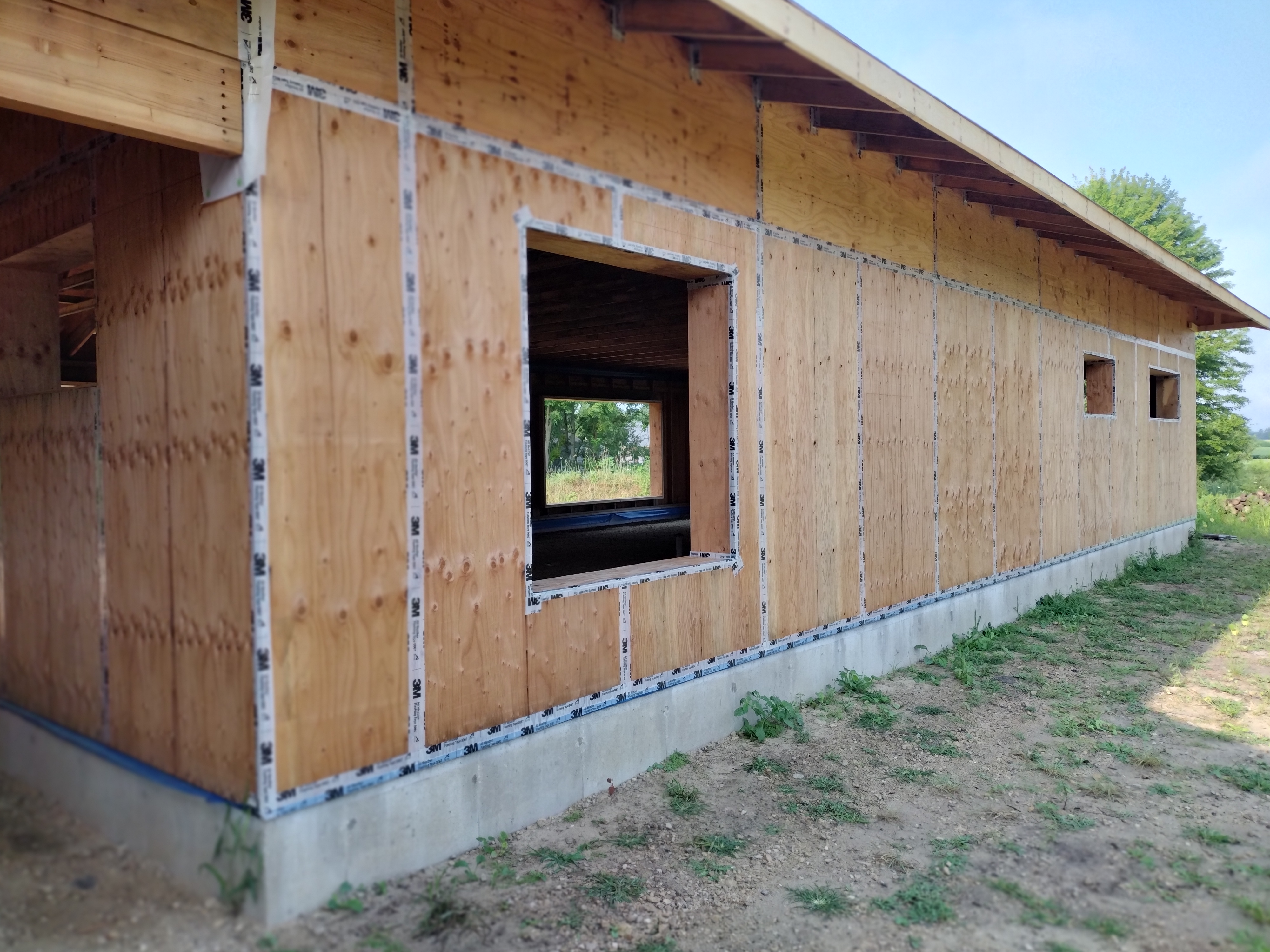
The taped plywood sheathing is this home’s designated “Exterior Air Barrier”.

The truss tail slots, cut in by the carpenters, were also taped. The 2 inch gap at the top of the sheathing was kept open for attic ventilation. Sealing the truss tail slots will protect the (yet-to-be-installed) insulation from air and moisture intrusion, a phenomena sometimes called “wind-washing”.

Our next step was to roll out and tape the WRB (water resistive barrier, or housewrap). Tightly stretched and cap-stapled at each stud line characterize a quality job. This work, together with the 3M taping, is more than ably done by novices. Our crew on this day include my son-in-law Matt, and my friends Laura, JC, and Xin Xuan. All together, we put in 162 “weekend warrior” hours taping, folding, rolling out and wrapping. I’ve observed many a construction site, and I have to say: our work is the best I’ve seen.

Tyvek HomeWrap’s main function is as a rain barrier. It can also be installed as a wind barrier if the bottom edge is taped in the same manner as the top edge and side seams. I elected to keep the bottom edge open for bulk water to escape should the material someday be breached.
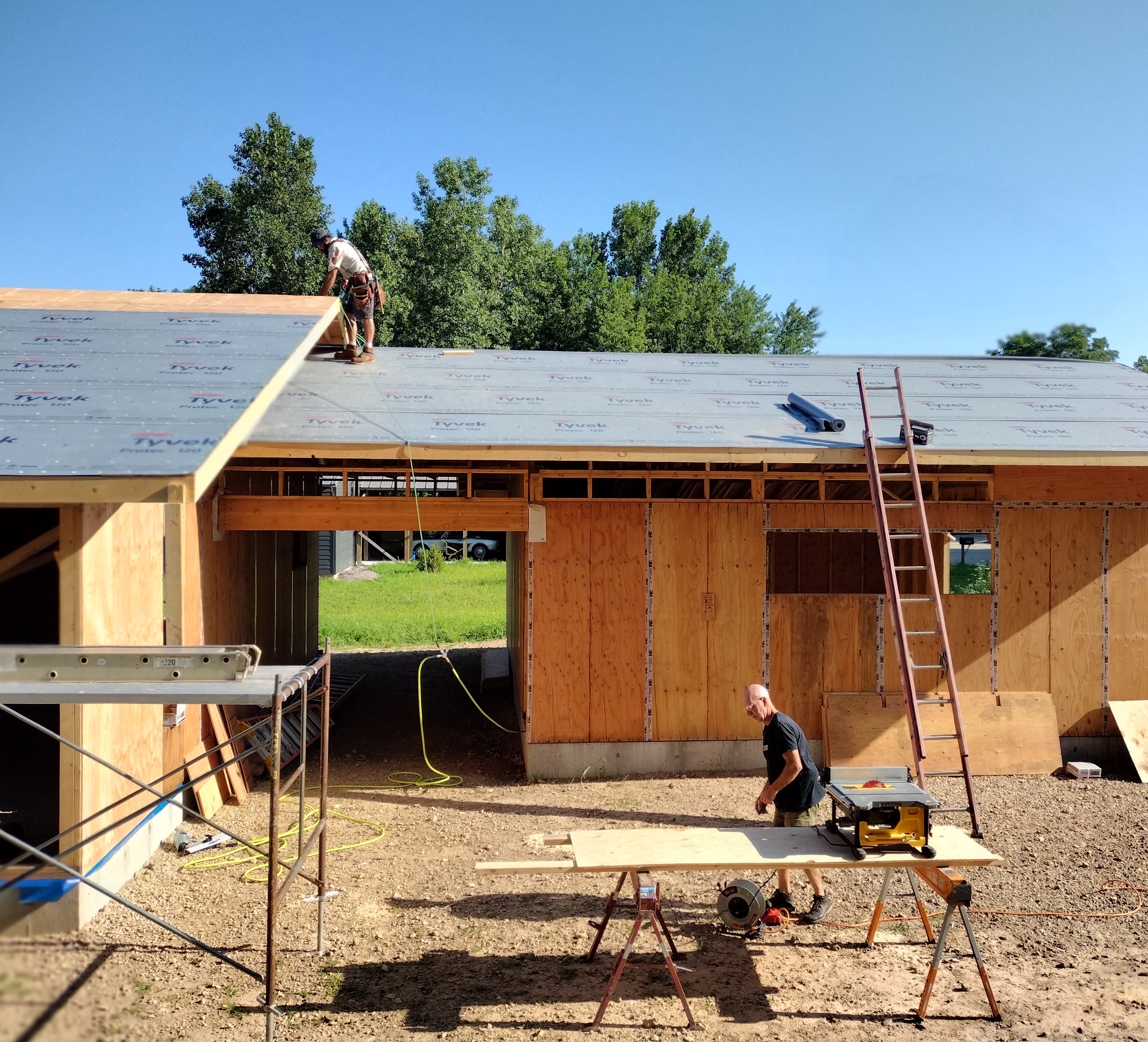
Meanwhile, carpenters Dave and Cale were rolling out and cap stapling Tyvek Protec synthetic roof underlayment.
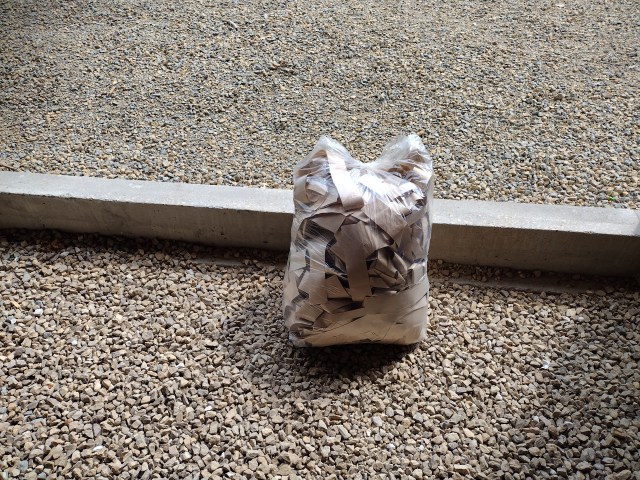
This phase of work generated a number of bags of brown paper backing from the 3M tape, and some Tyvek scraps. The backing was taken to a recycling center that accepts miscellaneous paper. The pieces of Tyvek that were too small or awkward in shape were sent to landfill. The larger pieces and partial rolls are saved for future use or for use as tarps.
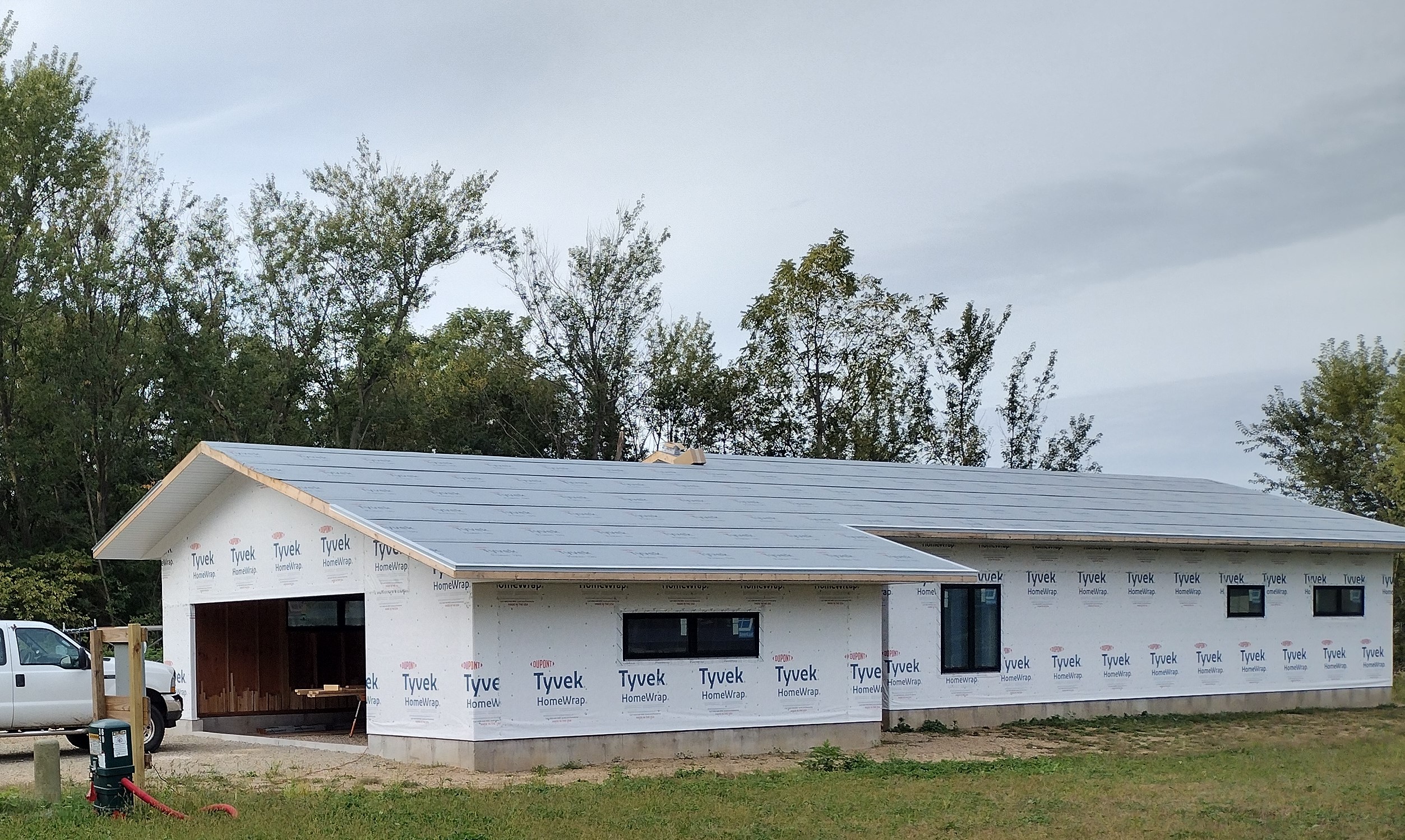
All buttoned up: the windows and synthetic roof underlayment, together with the Tyvek housewrap is this home’s designated “Exterior Water Barrier”.
The (yet-to-be installed) steel roofing and the (yet-to-be installed) cement board siding will be the first line of defense against the forces of nature. If or when these finish materials are breached, the underlayment and housewrap, properly lapped, taped, and cap stapled, will stop water intrusion. These two defensive materials are both water-proof AND vapor-open. Should water leak through or condensation build up and wet the underlying wood structure, sunny or dry weather will allow for evaporation. The wood can dry, preventing mold or mildew from taking hold and causing rot and a build up of unhealthy indoor air.
 POEM HOMES