Why we love Spring Green
May 20, 2024: Our little Village (population 1600), has an abundance of culture, cool people, and natural beauty. Check out this Travel Wisconsin video:
May 20, 2024: Our little Village (population 1600), has an abundance of culture, cool people, and natural beauty. Check out this Travel Wisconsin video:
March 1, 2024: It’s been 2 years since I brought you up-to-date on my progress working with homeowners interested in building super-insulated, net-zero or net-zero-ready spaces. Of the 6 homes I featured in my March 2022 “On the Boards” blogpost, 4 were built. I hope to show you pictures soon. Two homes are on indefinite hold, due to rising construction costs and difficult timeframes.
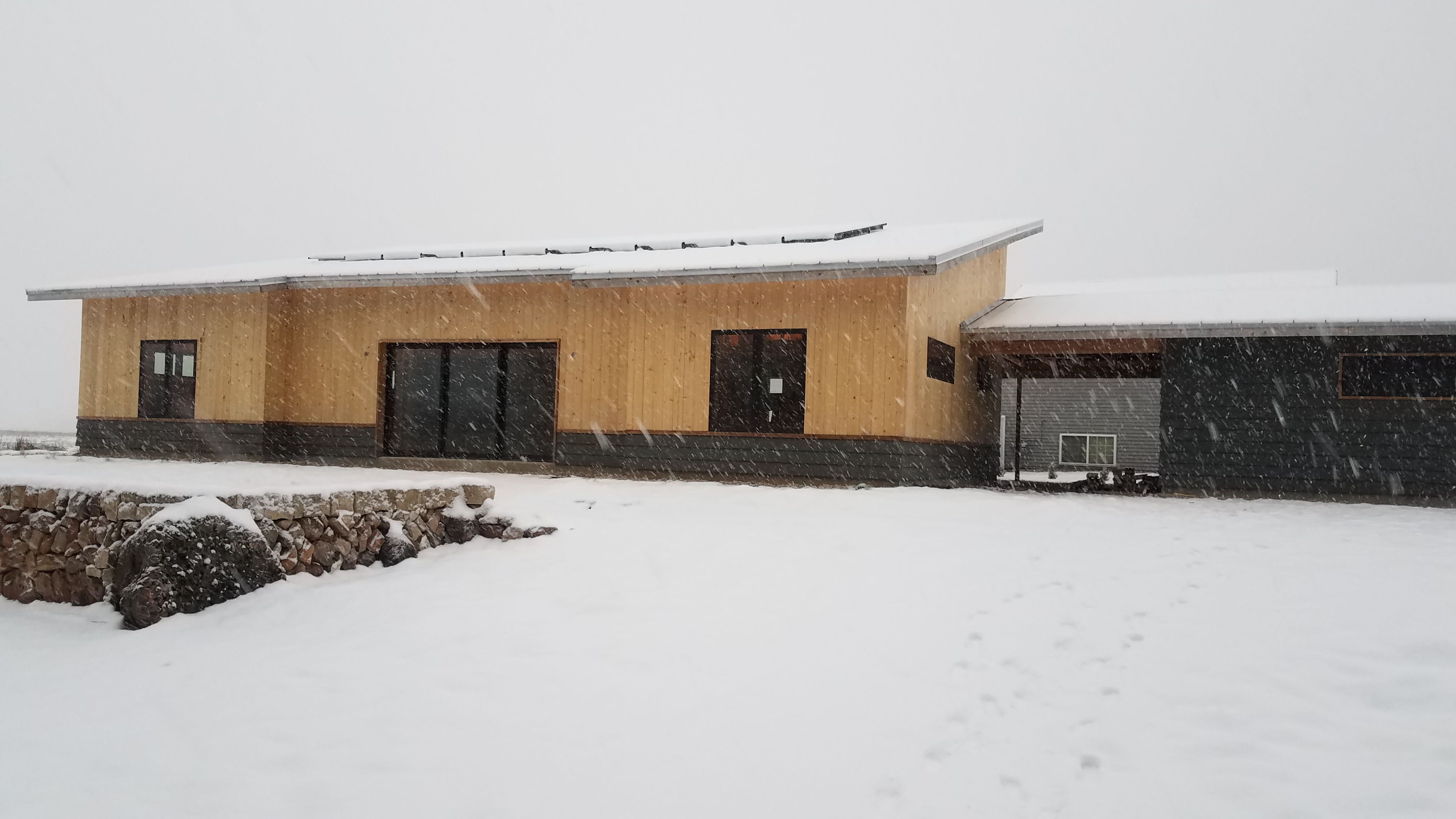
Frustrated by the slim pickings and poor condition of the housing for sale in Spring Green (pop 1600), my determined clients figured it would be more satisfying and in the long run more economical to build new. There was a strict budget, but by keeping the form and details simple, we could use higher quality materials and allow a few splurges. I chose Zip System R-12 sheathing on a 2×6 frame wall for a total R-value of 34. The ceiling was insulated to R-49 and R-13 thermax was attached to the interior face of the basement walls. My clients are delighted with the house and moved in last month.
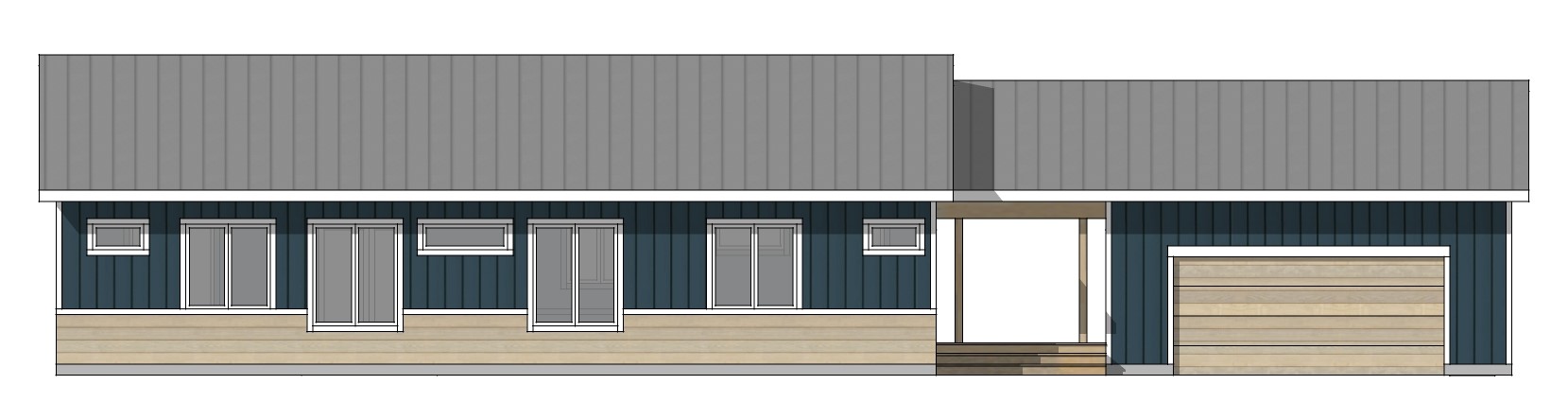
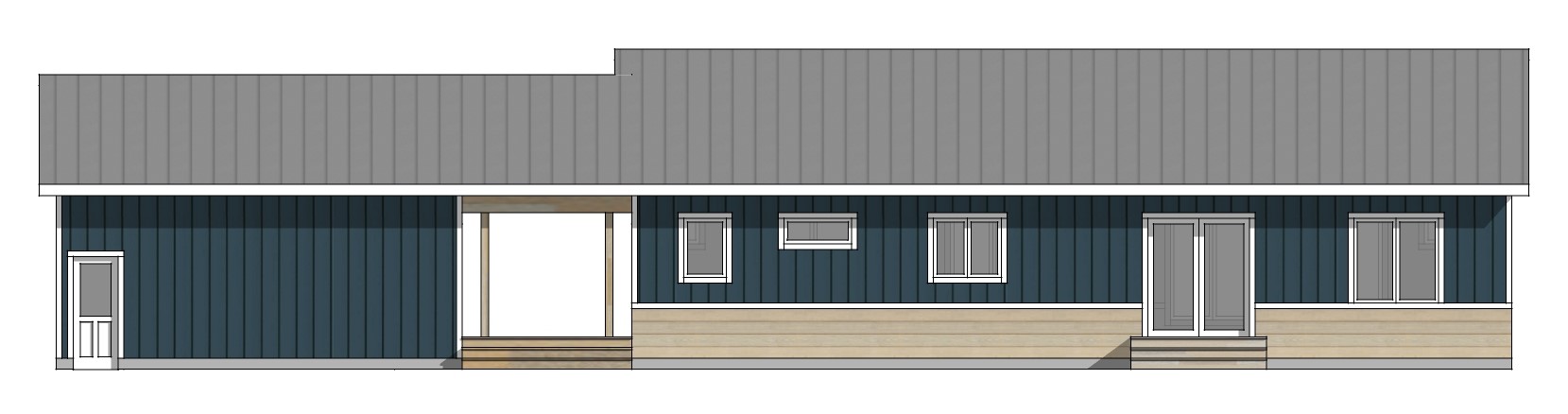
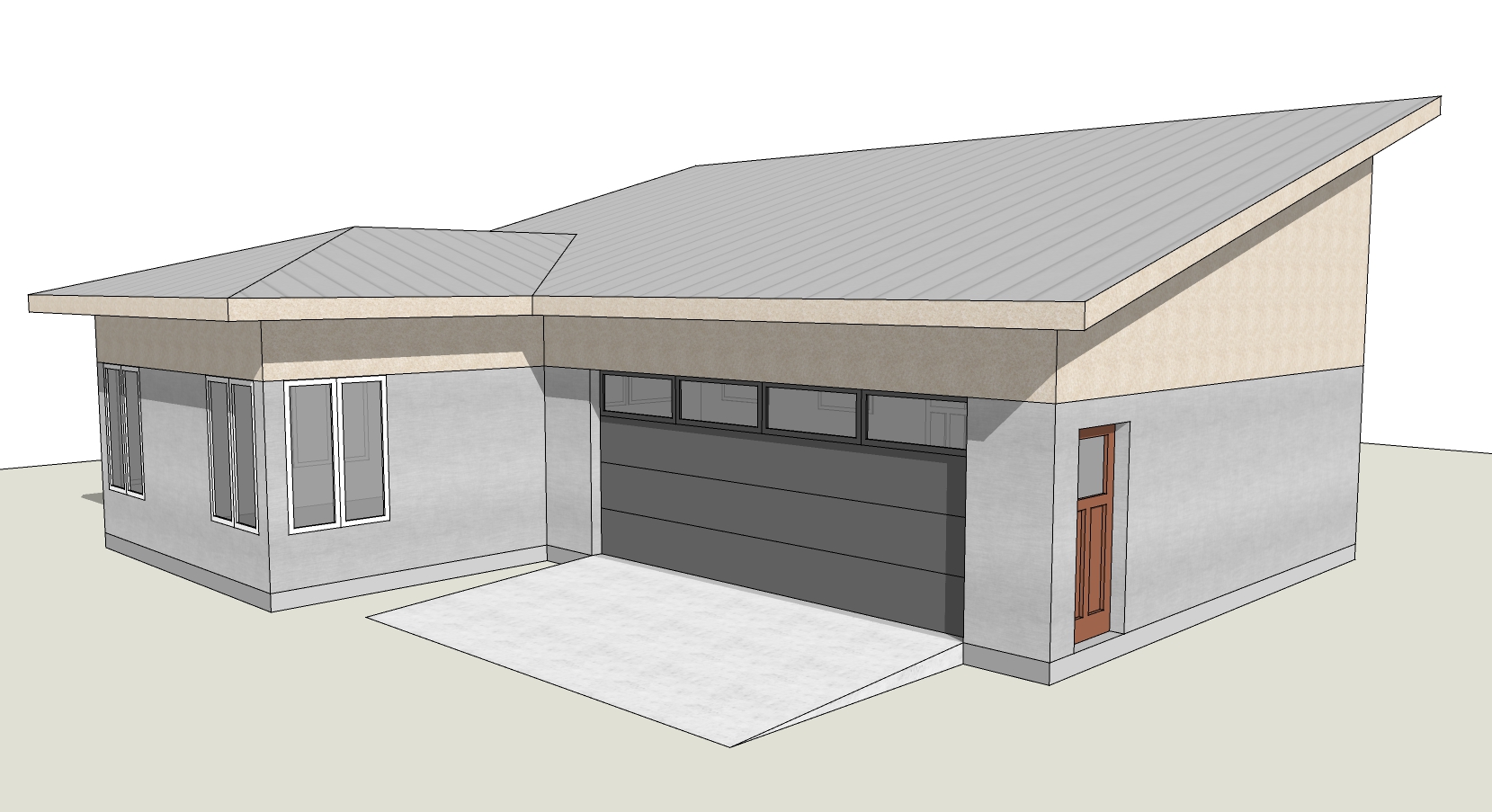
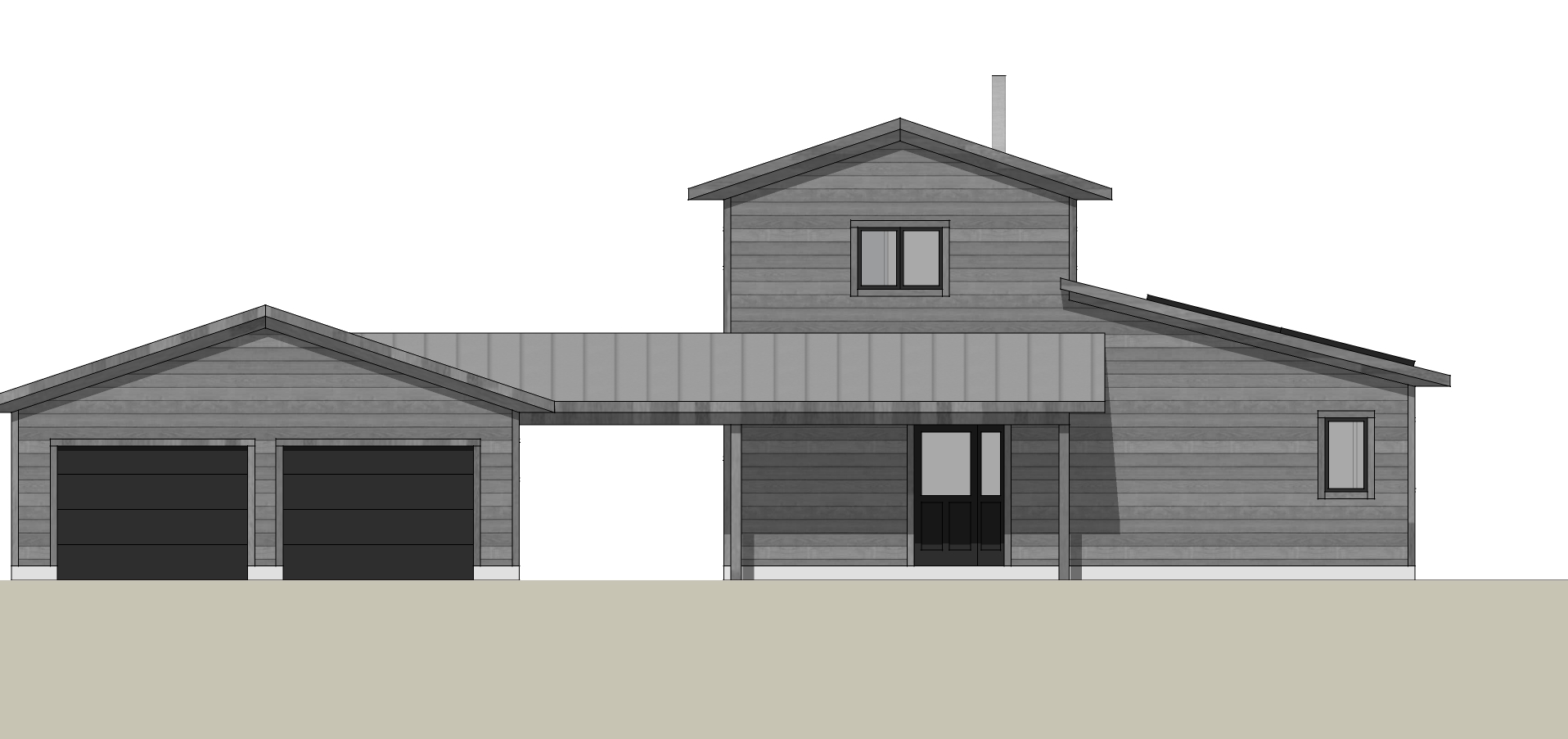
Work-from-home is common now, but some people still want a bit of a commute. How about a scenic stroll from your country home to an all-purpose garage–homebrew kitchen–office not far away? The exterior takes its cues from my client’s Taliesin Architects designed prairie style home, with a lighter band of stucco above a darker band, both in rich earthy tones. Our bold move was to attach the hip roof of the office to the spacious volume of the garage and kitchen, thereby fusing a prairie element to a shed roof, expansive enough for a large solar array. The walls call for 2″ of foam attached to the sheathing on a 2×6 wall, for a total of R-30. The ceiling calls for R-60 in the vaulted truss space. Plans are out for bid.
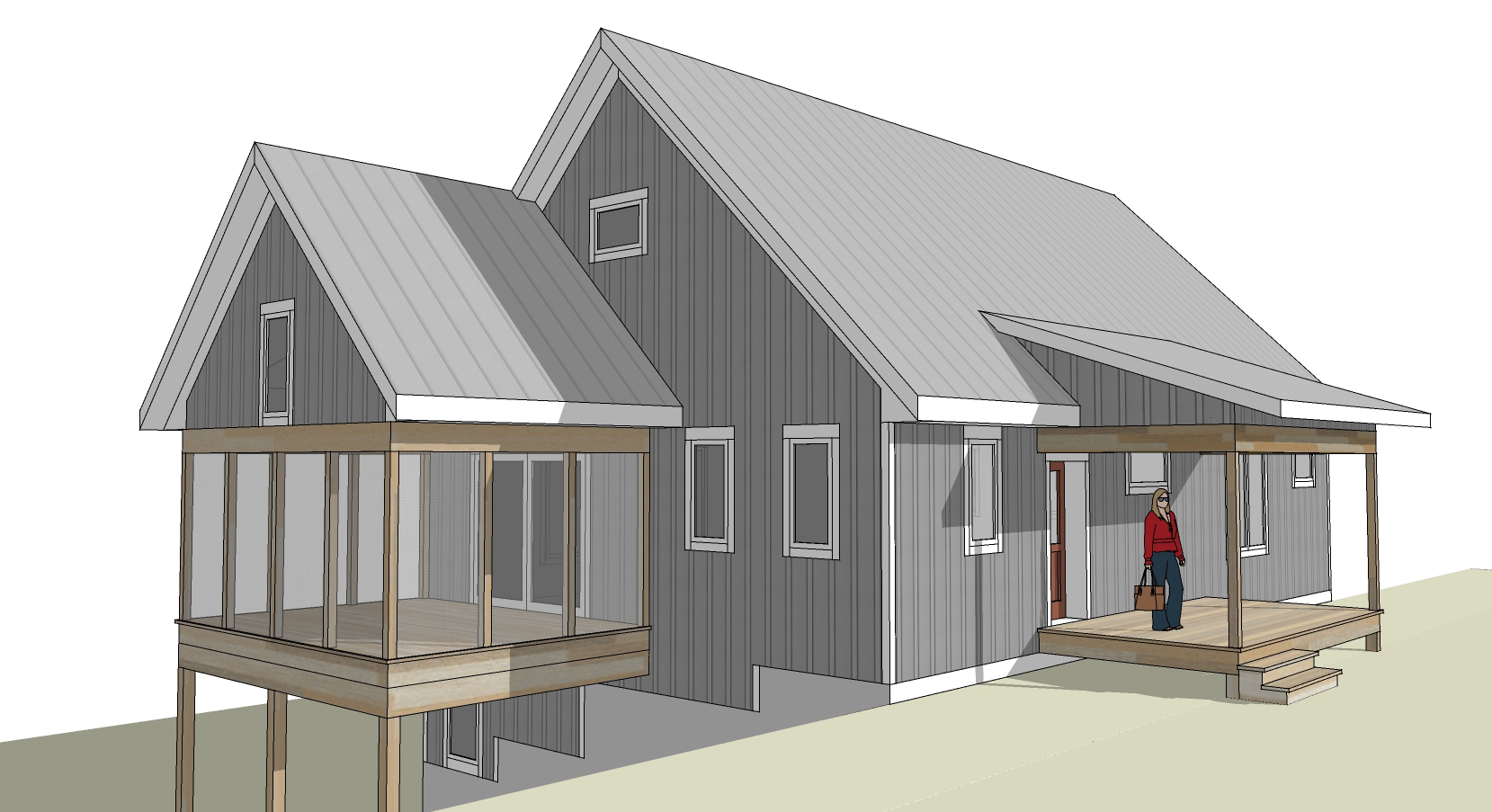
With pleasant views all around, an oak grove for shelter, and a sloping meadow facing southeast this home nestles easily into the site. The small footprint belies all the extra space gained with a walkout basement and under-the-eaves studio above. Preliminary plans call for an R-45 double stud wall, and R-60 within site-built rafters at the ceiling. Preliminary Plans are complete. Final Construction Plans are on hold.
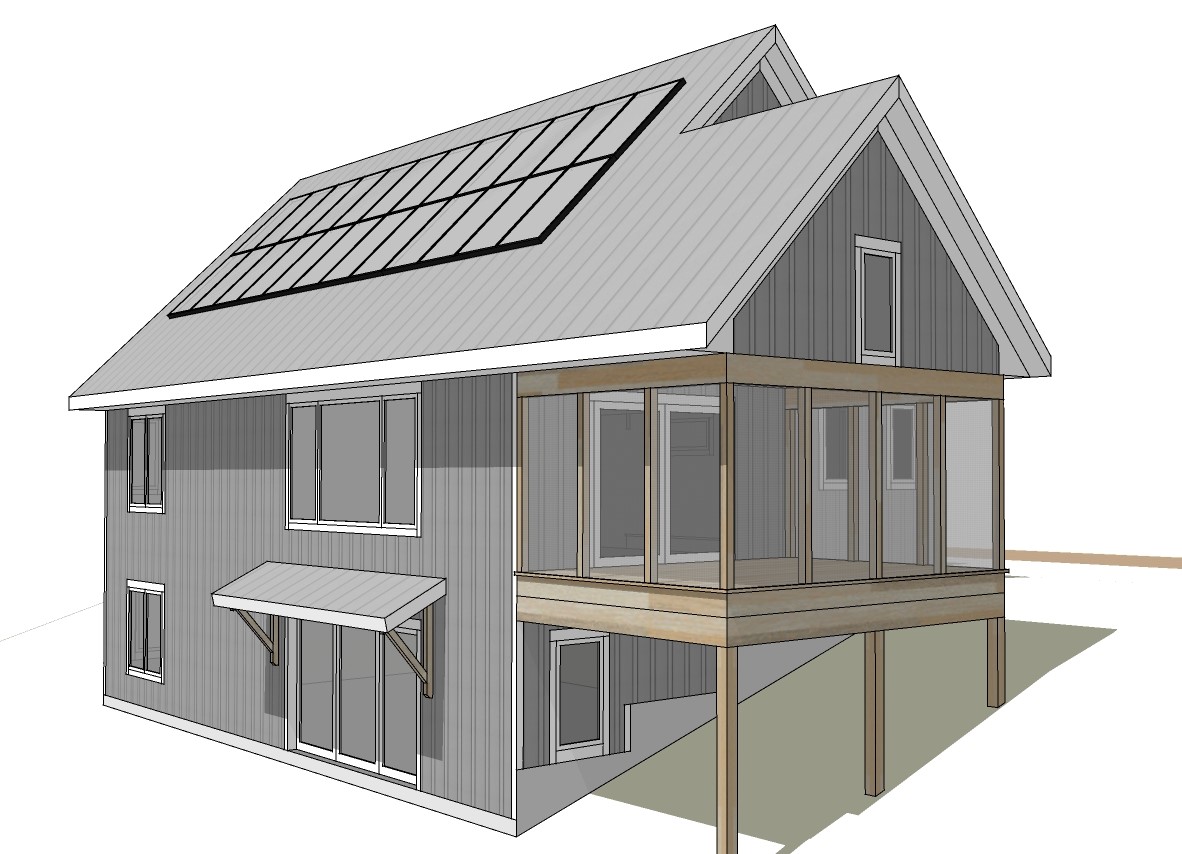
It was a pleasure working on this handsome family home with a semi-attached barn-look garage. Children’s bedrooms are in the walkout basement, with the parents suite on the main floor and tucked behind a work-from-home office. This home plans for R-45 double stud walls and R-60 to 80 on the (non-habitable) attic floor. Plans are out for bid.
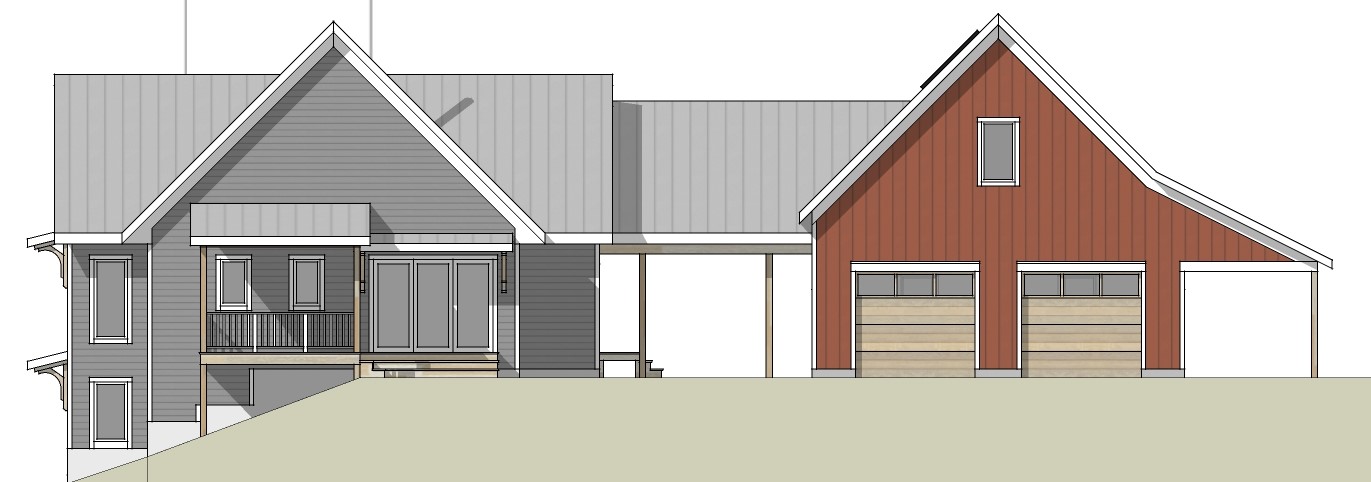
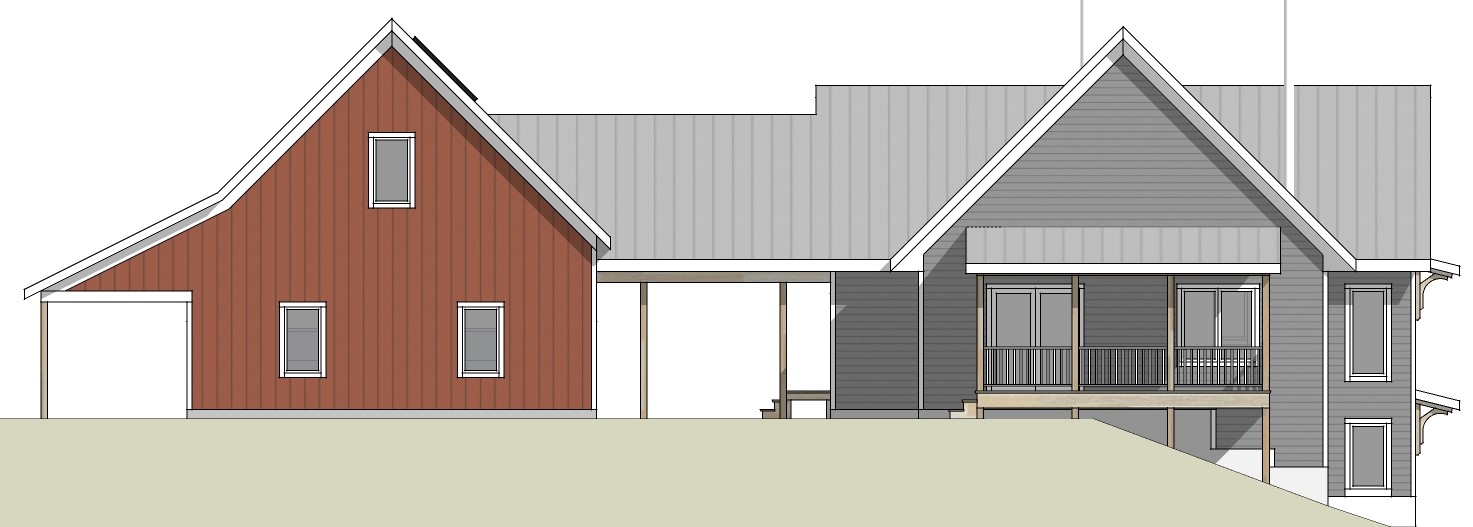
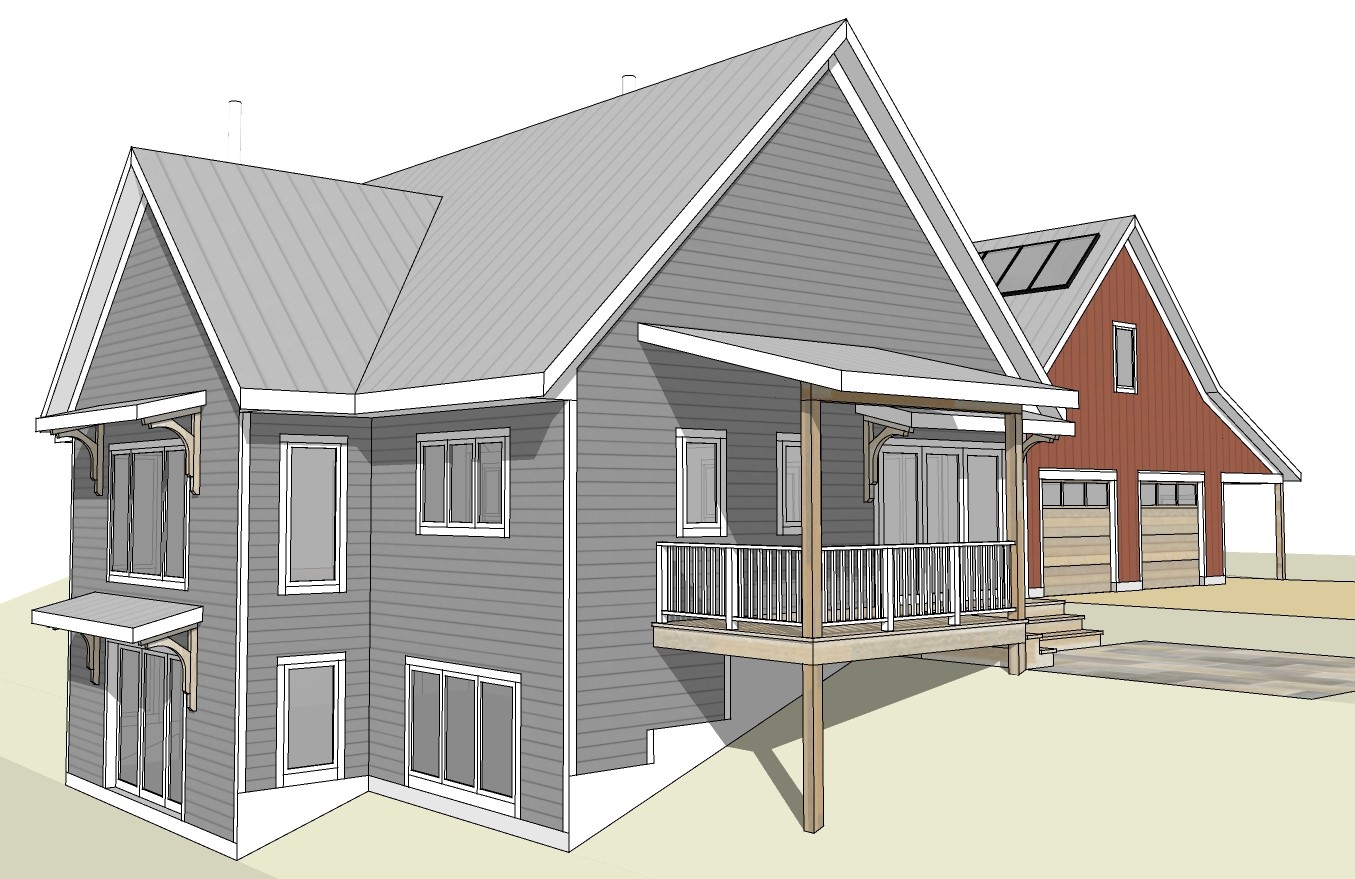
This large and striking home will sit atop a meadow, now planted in native prairie by the owners who long to move from the city and enjoy this special spot. Preliminary Plans call for R-45 double stud walls and R-60 in the vaulted ceilings. Some revisions to the Preliminary Plans are pending.
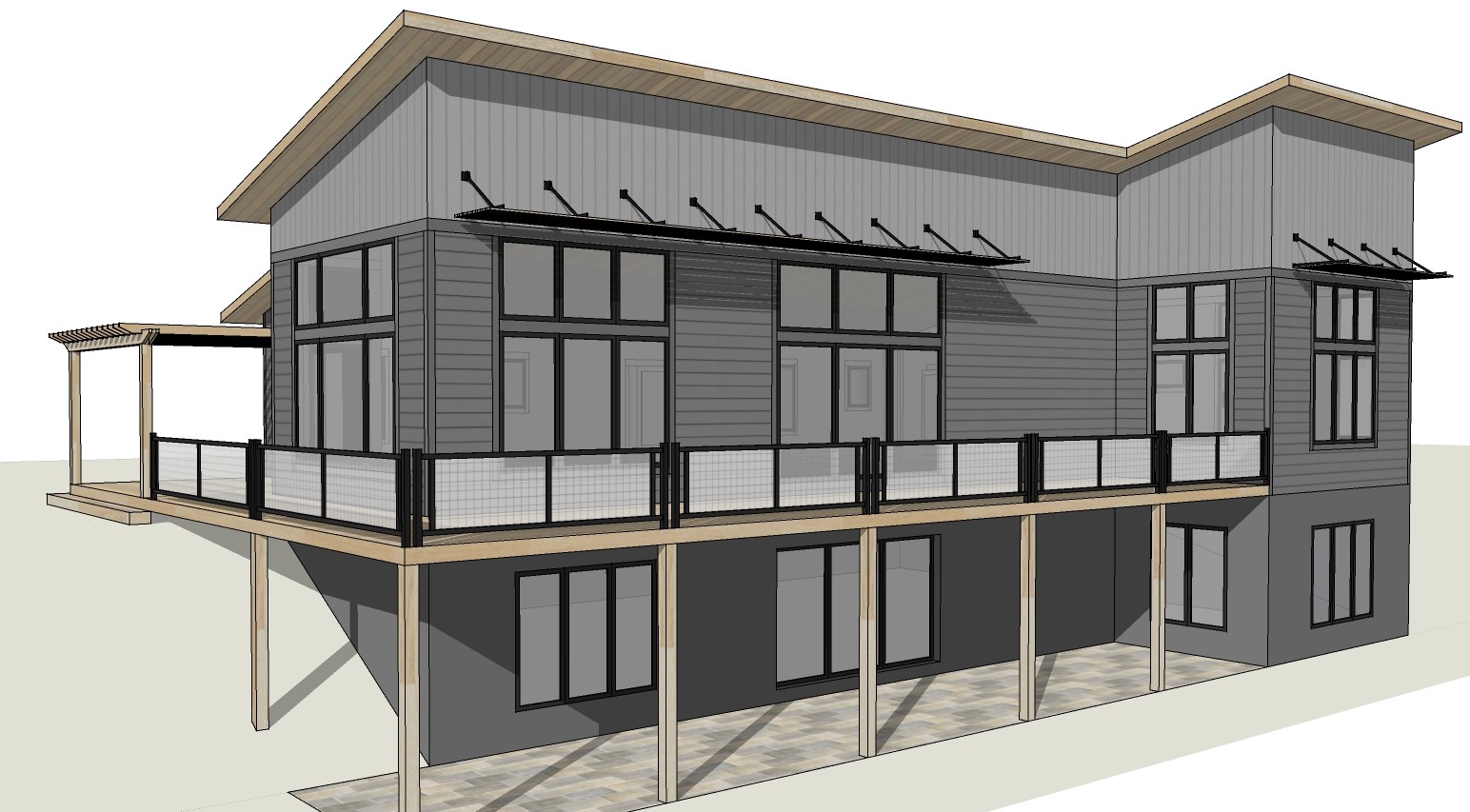
A cabin on the North Shore of Lake Superior is a wonderful vision, and I was eager to help my clients see their graph paper sketches transformed into fully scaled plans and a 3D model. This project is on hold.
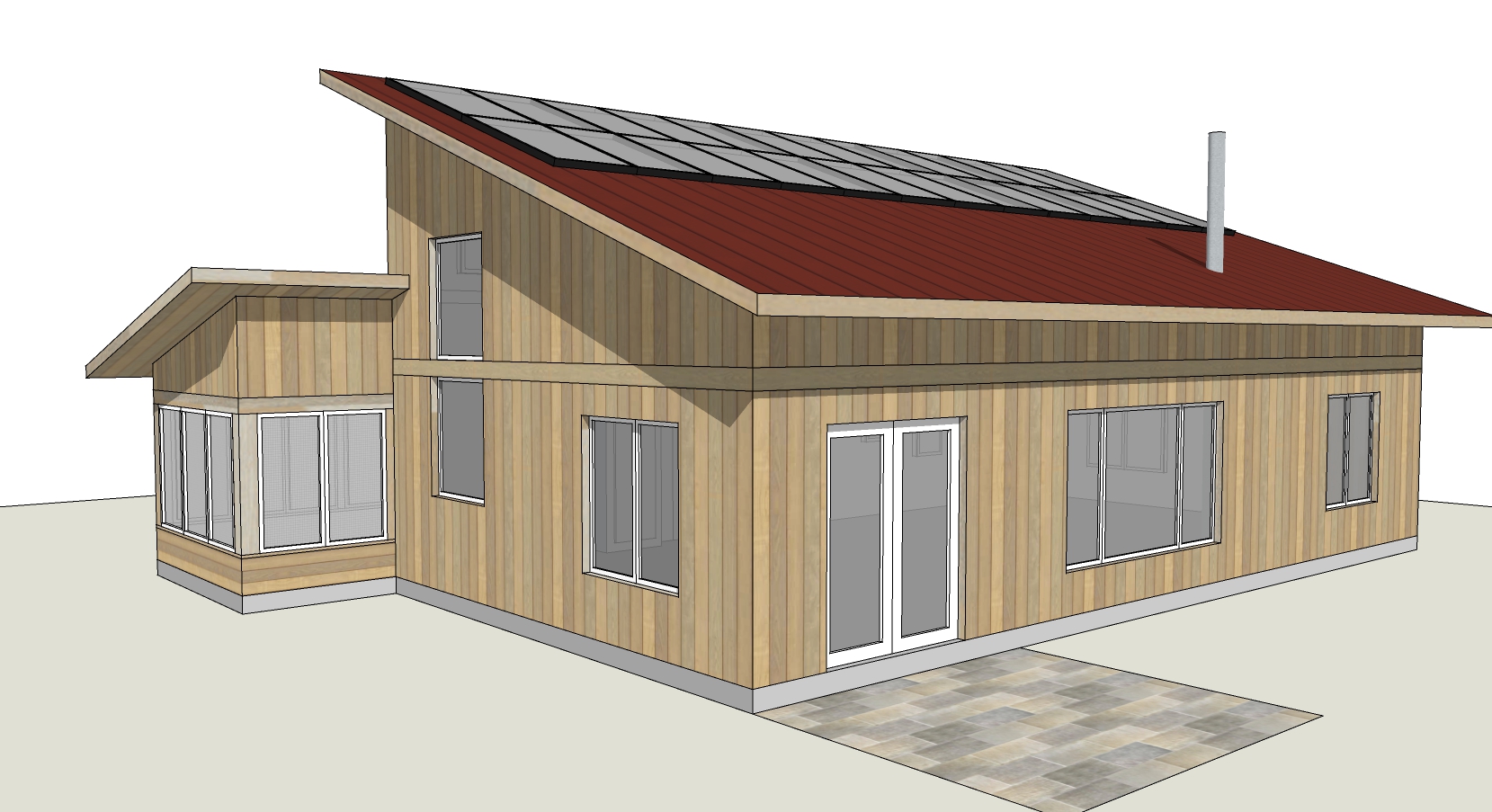
When your house is too small to host your extensive family, who love to gather to cook, eat, play cards, and hike around the farm, you build a party barn—right? This design calls for an R-45 double stud wall and R-60 in the vaulted ceiling. This project has received preliminary zoning approval. The next step is finding a suitable general contractor and preparing Final Construction Drawings.
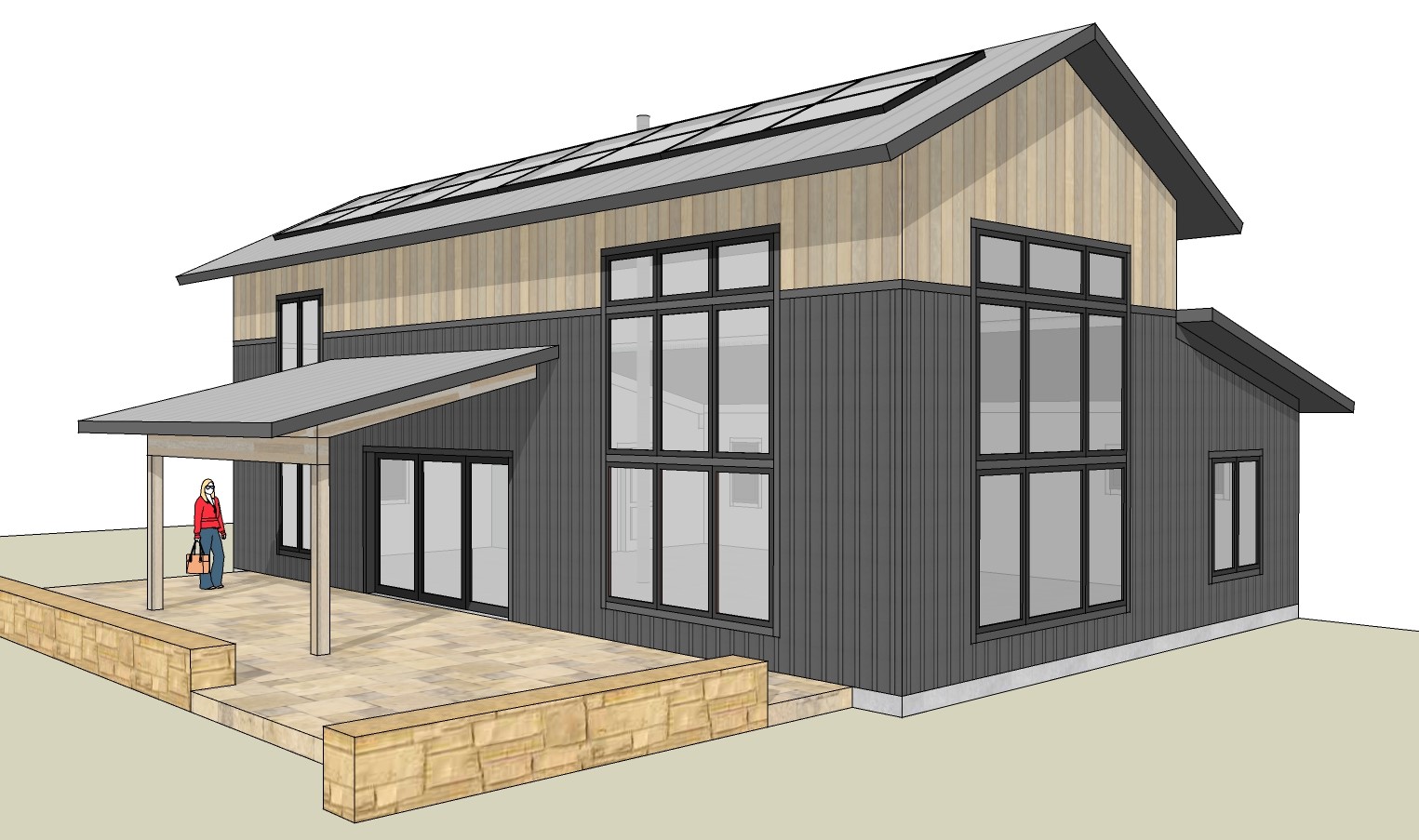
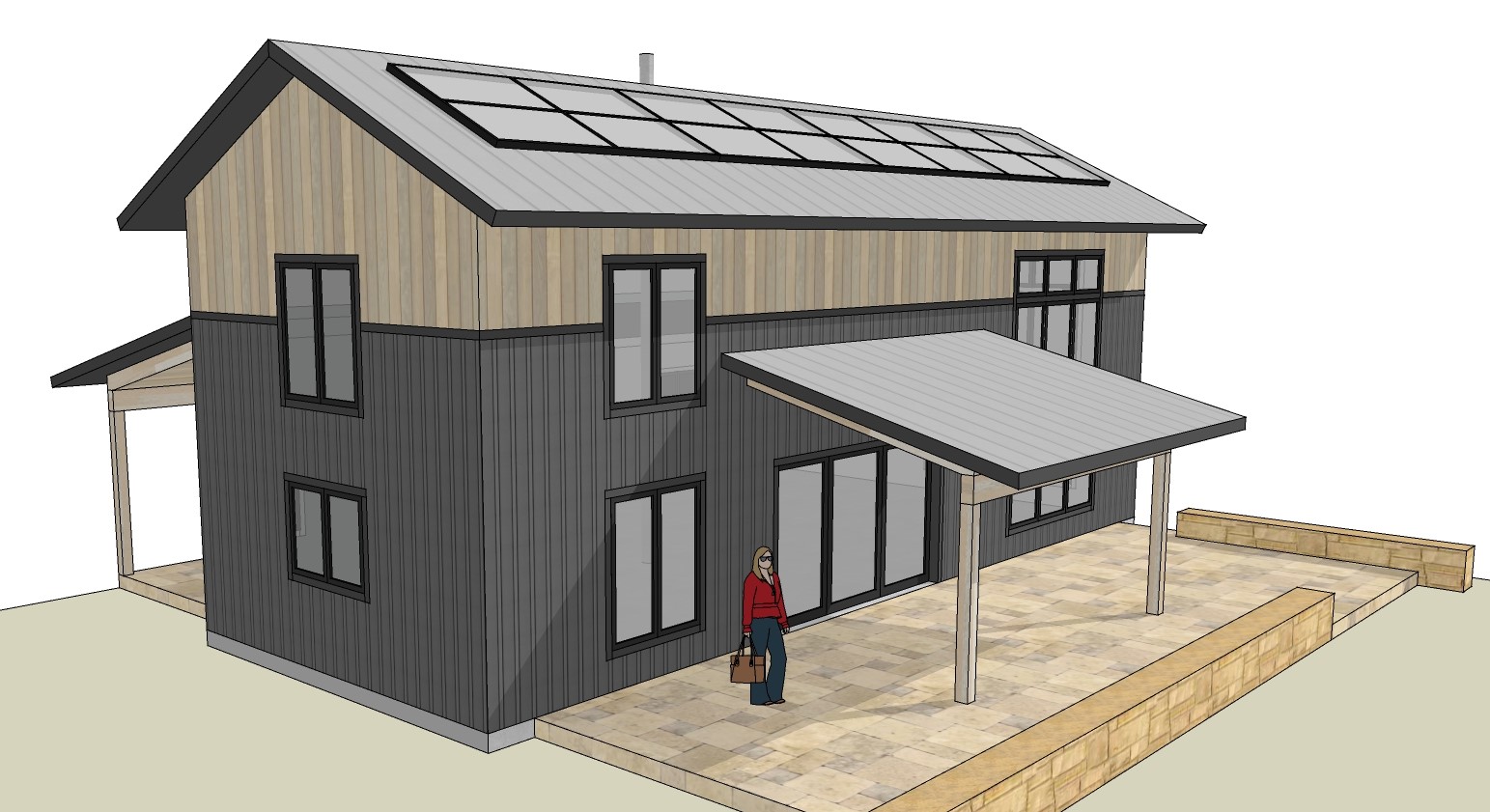
November 16, 2023: Writing clarifies, and putting together a piece for my most-relied-on publication, Greeen Building Advisor, was an honor and very satisfying experience. Anyone who knows me well will know that (hopefully, only when asked), I’m not shy about making my opinion known or giving out advice. When it comes to home design, I came up with this pithy statement:
“Become curious about the space around you.”
Amber Westerman
In the article, I lay out 7 steps in the design process, with links to free or low-cost calculators, websites, or software that make the work easier.
- Think in 3D
- Know your Budget
- Study the Site
- Do a Heat Loss Calc
- Get a Blower Door Test
- Chose HVAC Equipment Based on Data
- Size a PV (photovoltaic) System
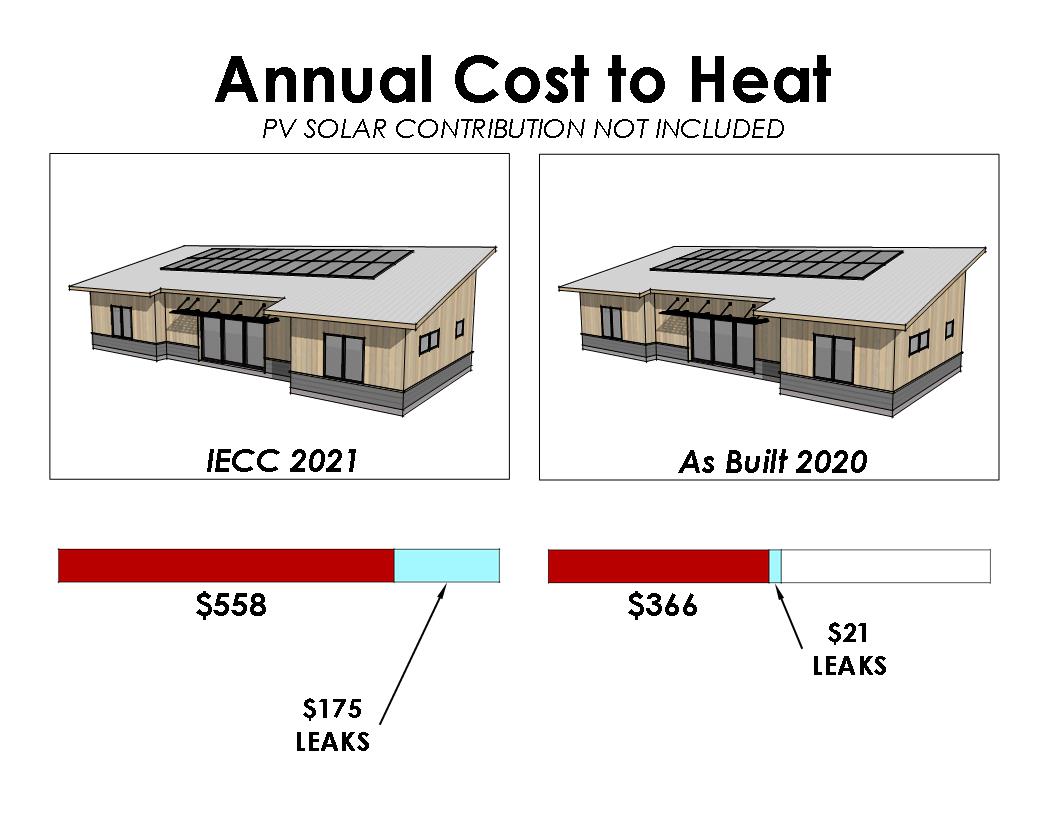
The upshot is that if you use space wisely, and insulate and air-seal beyond IECC (residential code), you can downsize the equipment needed to heat, cool, and power your life.
“Great article. You are a gifted communicator using words, pictures, and illustrations. This article is a great help to those of us contemplating building something similar”.
Green Building Advisor reader
June 15, 2023: Like shining an apple (only a little more harried), I’m putting the polish on two presentations for this year’s Midwest Renewable Energy Fair. Both are topics I took a big bite into while building the Poem Home featured on these pages:
How to Reduce Construction Waste
A Barrier-Free and Non-Toxic Home Explained
When I began my research in 2018, actionable information was hard to come by. It still can feel that way, because these are big topics and uh…..things change. But it’s gotten easier. More and more people are working these topics, sharing their information, nudging industry, and offering alternatives to business-as-usual.
“Say NO to a Dumpster!” is how I begin my Construction Waste talk. I found logical (and a few unconventional) ways to save money and the environment by drafting up “cut plans”, using bio-degradable materials, and donating, repurposing or recycling packaging and excess materials.

“Be a Host, Don’t Be a Jerk!” is my warning for the Barrier-Free talk. I show pictures of my house and how I…so far…fall short of being a gracious and generous host. The entry path from the street to my front door is still gravel. But, should they stay overnight, they’ll enjoy the accessible shower!
I tend to be an open-windows fresh air freak, and can worry myself sick over what we’re doing to our precious planet. But I count my blessings that I don’t suffer like some people do with asthma, allergies, and chemical sensitivities. For the Non-Toxic Home Explained talk, I present the “Top 6 Things to Avoid”, share my material picks for Poem Homes, and a list of websites for more information.
The Fair runs from Friday June 23rd through Sunday June 25th. The keynote speaker on Friday evening is Amy Goodman. My talks are on Sunday at 11 am and at 1 pm. I’d love to see you there!
February 17, 2023: That’s how I’m going to start and then I’m going to talk through it step-by-step to whoever’s interested at the upcoming Duluth Energy Design Conference, on February 21st. This will be the furthest away and most professional audience I’ve presented to and I’m pumped to do well.
I’ve had a few “issues” now that I’ve gone through 3 winters…..and I have data. I’m going to fess up about some problems with condensation and uneven heat. And I’m going to brag about my net-zero status and how truly blessed I feel to live here.
In my first winter, I had liquid condensation and chunks of ice clinging to the corners of my windows during cold snaps (let’s say 10 degrees and below). I wiped it down, ran fans, and chalked it up to the conventional wisdom that “it takes 1-3 years for a new house to dry out”.

But I had the same problems the second winter and now this one. My big revelation came when I borrowed a good humidistat (no, the hardware store one wasn’t accurate enough) and compared my house with Dave’s.
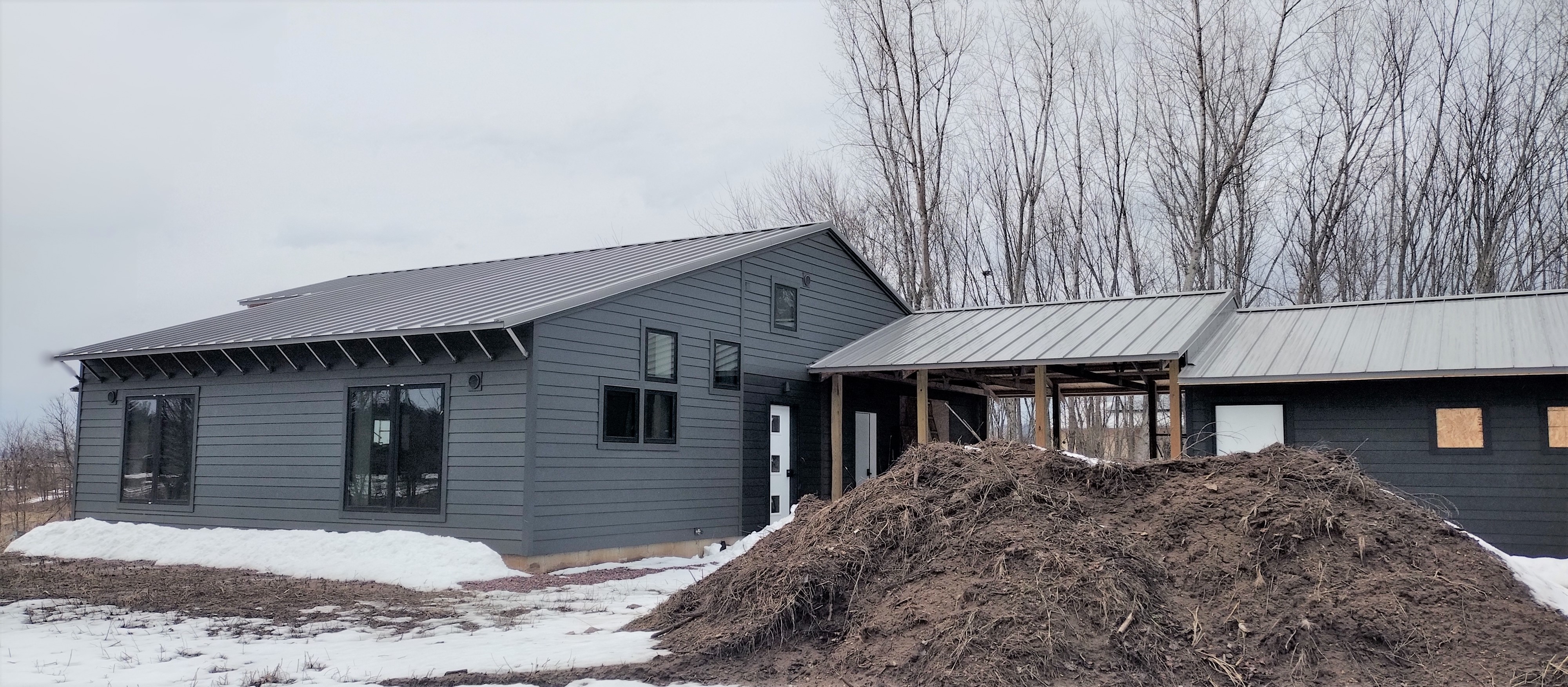
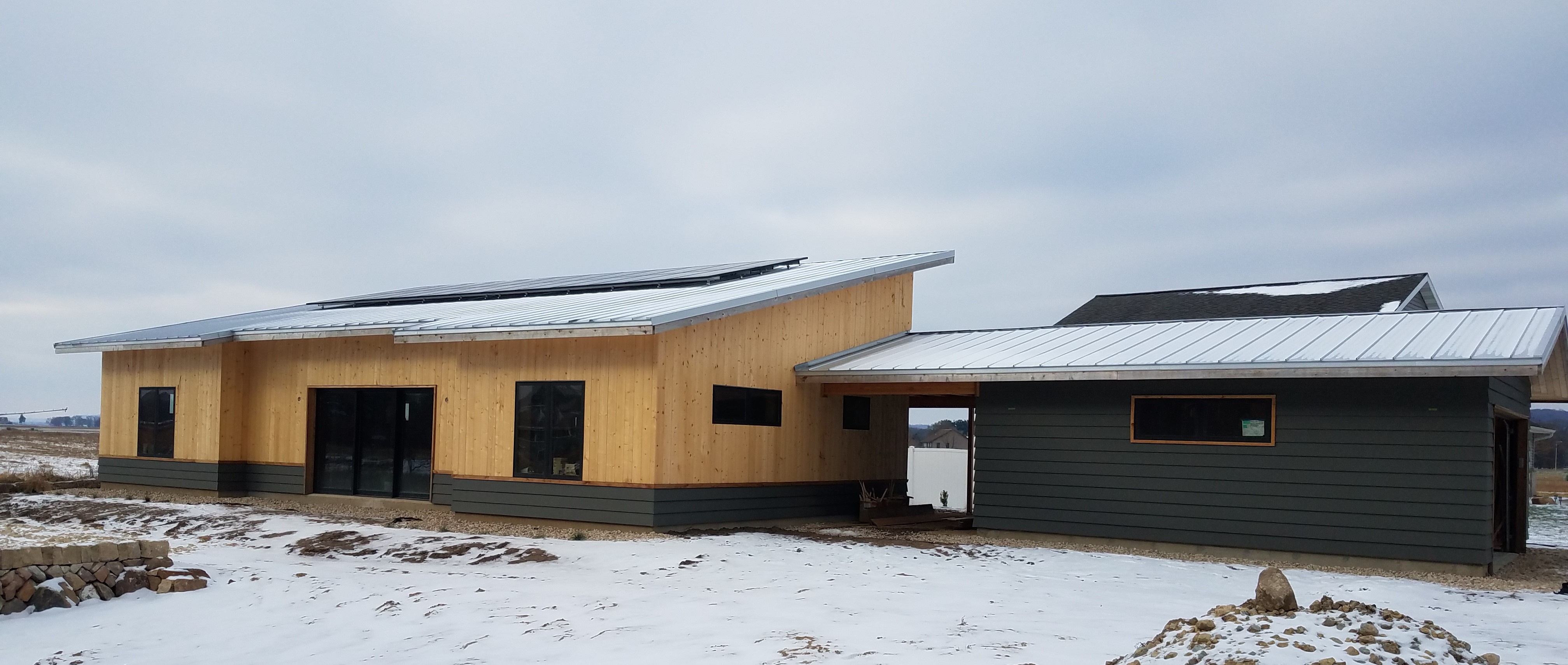
Dave moved into his new house next door last fall. It’s very similar to mine: slab on grade, 12″ thick double stud walls with dense pack cellulose, a super-insulated ceiling, Marvin fiberglass windows with standard glazing, and MemBrain installed as an interior air barrier. He heats with a Mitsubishi Air Source Heat Pump (ASHP) like mine and brings in fresh air with a Lunos Heat Recovery Ventilator (HRV) like mine. But he’s had no window condensation and certainly no icing.
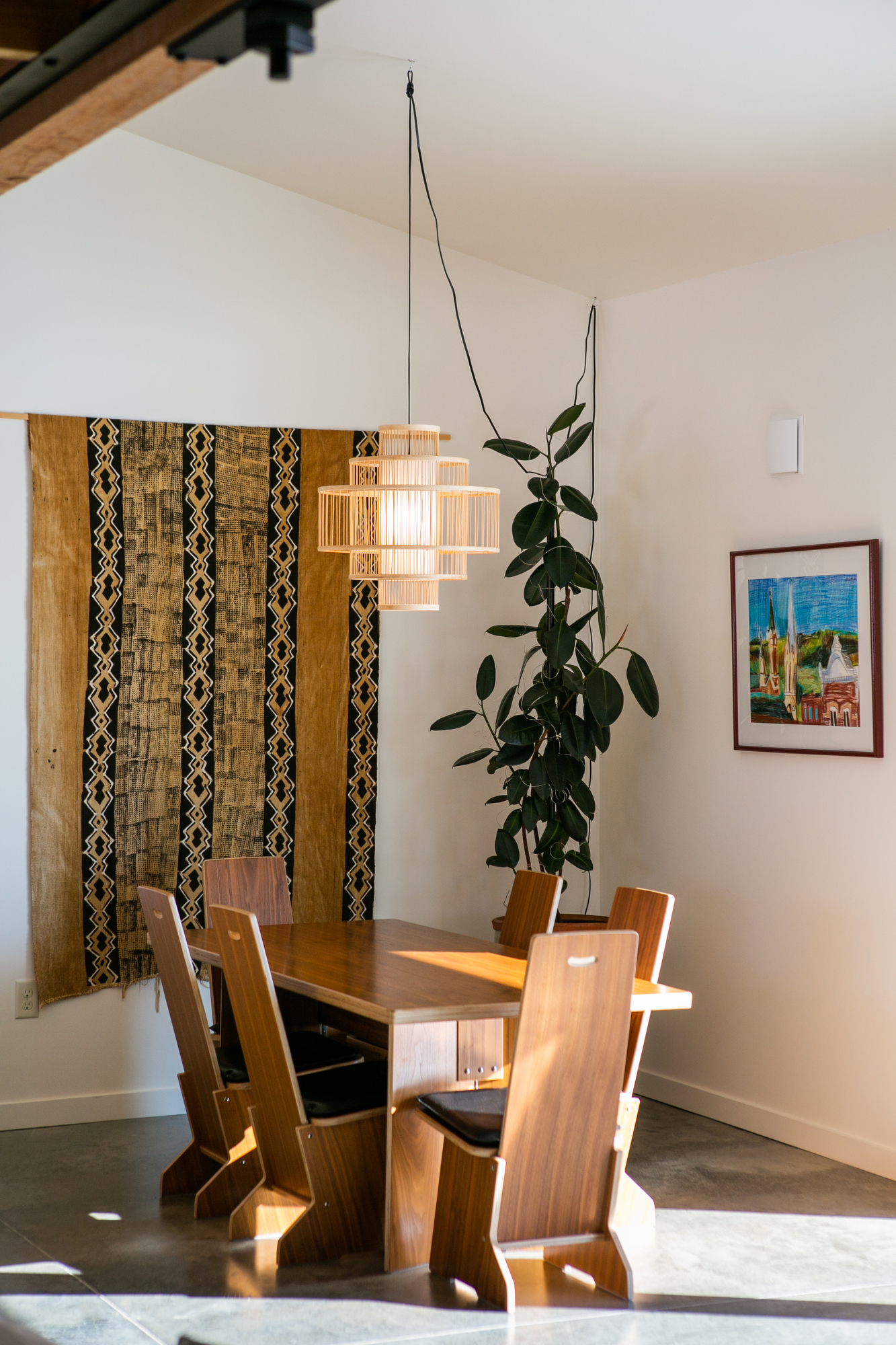
The only thing we could think of is that he doesn’t have house plants. Yet.
It could be that, or it could be that he runs his HRV on high. I usually run mine on low because on high it’s too noisy. He also has his ASHP located in a more favorable position: in the main room on the lower level, not in the loft like mine.
In any case, the humidistat told the story:
Amber: Relative Humidity 38 – 45%
Dave: Relative Humidity 20 – 25%
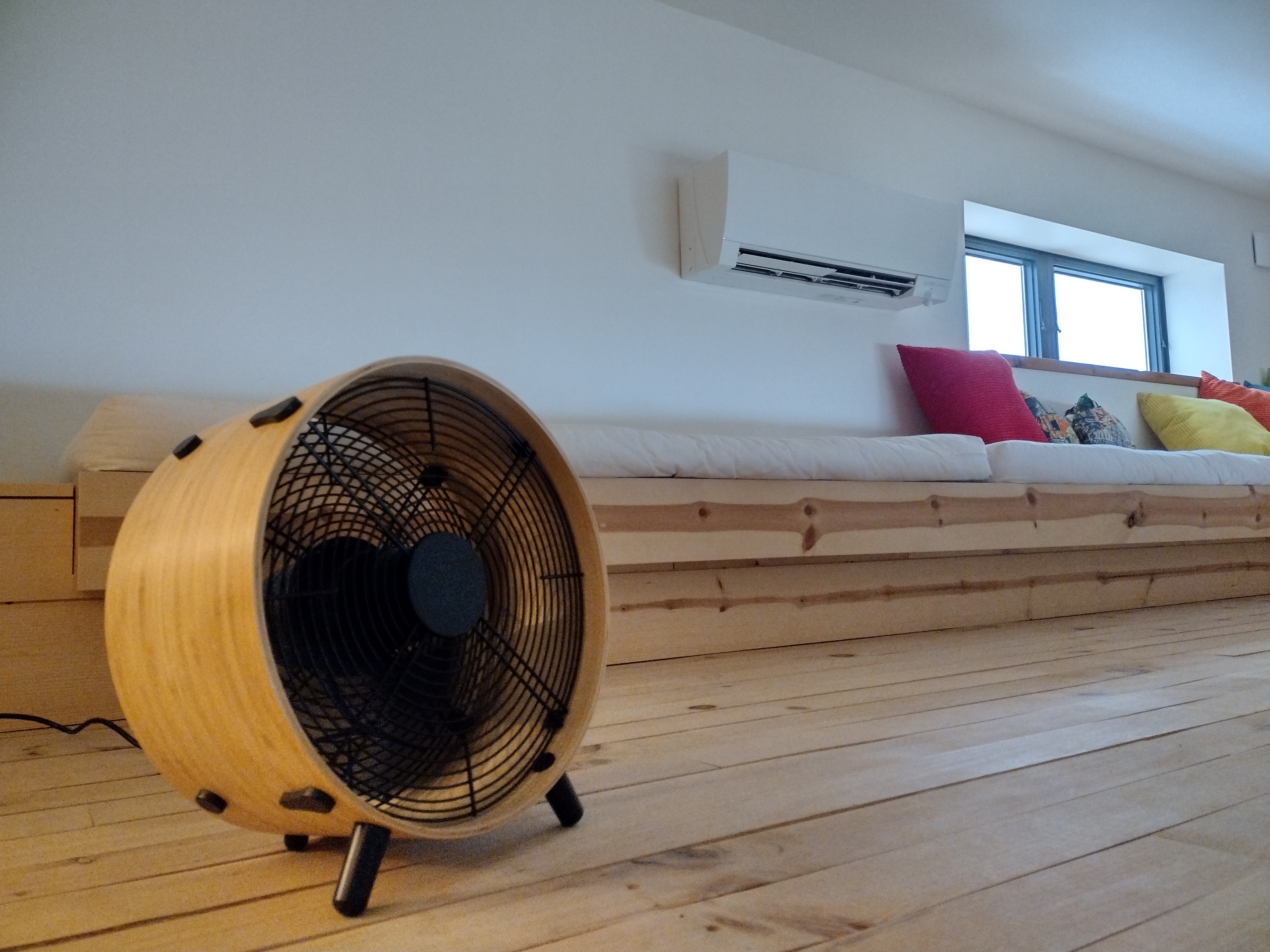
I’ve since adopted more aggressive tactics (no, I haven’t thrown my plants out in the snow). Running my HRV on high and running a small fan in the loft on high to better distribute the heat pouring out of the the ASHP, I was able to bring the humidity down to 30% (but it liked to go up to 36% when I wasn’t looking). Now we just need a cold snap to see what the windows do. But you probably don’t want that and I don’t blame you.
A happier topic is the data on my solar production. I’ve updated the “NET ZERO” page on my website, and if you’re wondering whether it’s possible to go all-electric and ditch fossil fuels, check it out!
August 8, 2022: When it comes to wall paint, I have just a few simple criteria: it must be easy to apply, durable, and non-toxic. Mainstream paint companies have the first two down pat, but non-toxic? Not so much. That’s why I chose Ecos Paints, a small company in South Carolina who actually list their ingredients right on the label. Check out what they said about my project in their latest blog post. A Demonstration Home in Wisconsin
June 30, 2022: I was thrilled to be invited to talk with the high school students attending Taliesin’s Summer Camp. Their topic this week is “From Detail to City: Exploring the Concept of Scale in Architecture & Design”. Earlier in the week, they explored the scale of personal space. Later in the week, they’ll explore the scale of the city. My mid-week presentation was on the scale of a house.
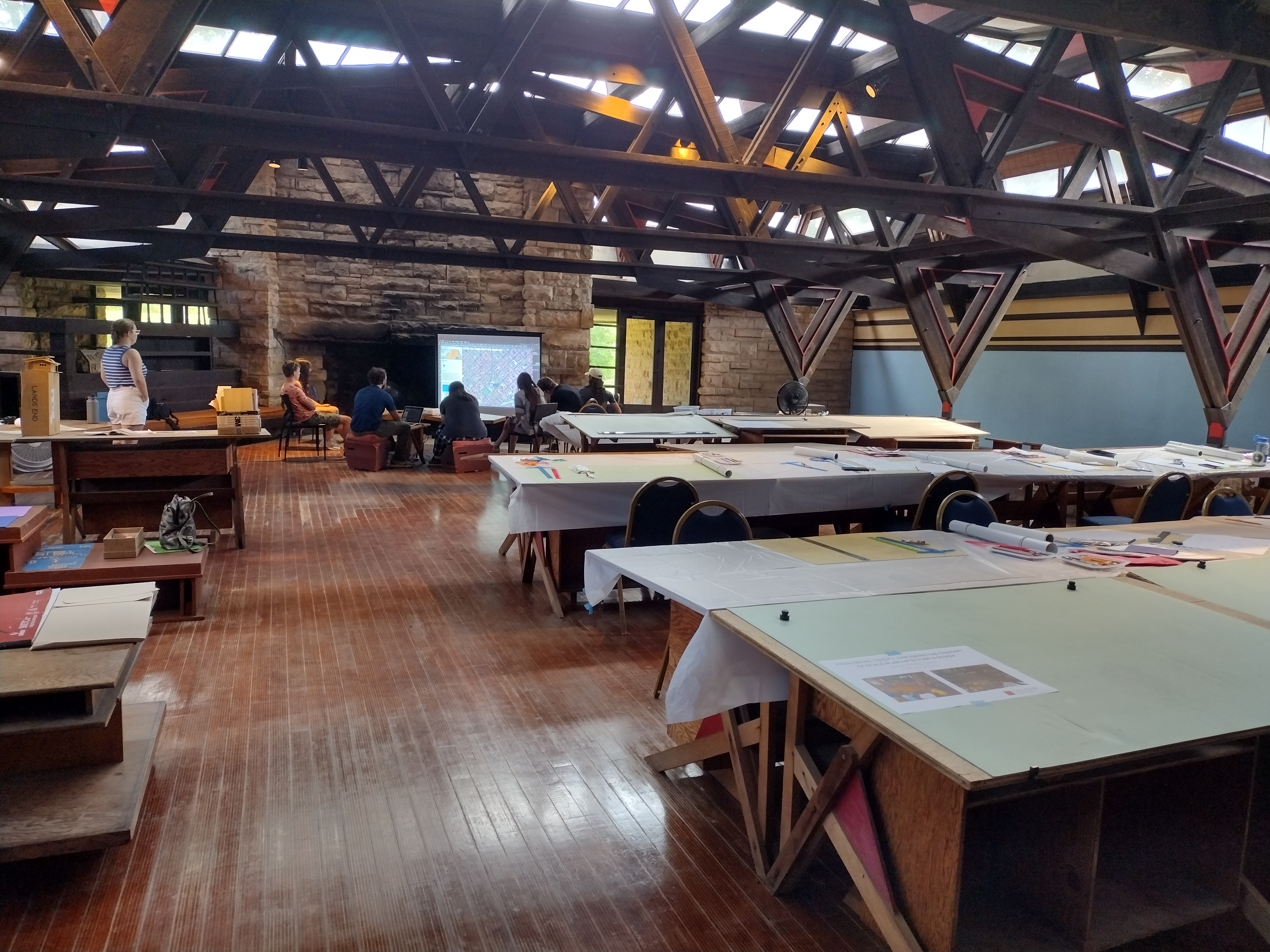
I brought in the cardboard model of my first Poem Home design, the Construction Drawings for the house built in Spring Green (the students are deep into section drawings right now), and slides showing the construction from excavation to framing to insulation to trim and finally to the installation of the solar panels. We passed around material samples as we followed the story: styrofoam, 2×4’s, plywood, cellulose, housewrap, wood and cement siding, tape, gaskets, steel angle iron, and other fun stuff.
We talked about drawing software, what things cost, how an eco-friendly house can fit into a neighborhood, and how to know in advance if your design will work. The students asked good questions and were able to draw on their personal experience to help them understand design concepts, how people use space, and how we create community. For me, the most rewarding idea we discussed is how the study of architecture involves subjective (and sometimes objective) observation combined with the designer’s imagination. Architecture is a fascinating field for these student to consider as they make their way. All I can say is: Look out world!
June 10, 2022: Do you like to learn new things, think new thoughts, and meet new people? Does “Summer Camp for Adults” sound like fun? That’s why I make a pilgrimage every June to see what’s going on at the Midwest Renewable Energy Fair in Central Wisconsin.
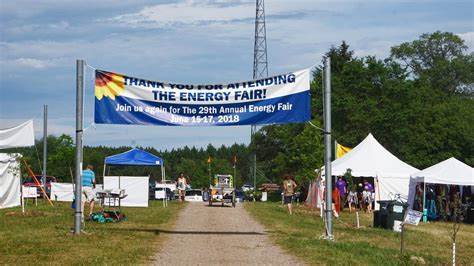
Sample a variety of workshops, stroll the fair grounds for interesting displays, catch lunch from a food cart, and pop in to the Big Tent for speeches (of the interesting kind), music (of the danceable kind), and people watching (of kindred spirits). I’ll be giving 3 workshops. Will you stop by and say hi? I’d be delighted to see you!
How I Built a Net-Zero House
Saturday June 25th at 3 pm
How to Minimize Construction Waste
Saturday June 25th at 4 pm
A Barrier-Free and Non-Toxic House Explained
Sunday June 26th at noon
May 19, 2022: It’s been a career-long goal to get a major piece published in Fine Homebuilding and with the completion of my first Poem Home, I made the pitch—and it was accepted! The process of working with the editor, the illustrators, and the photographer to put this professionally composed and colorful piece together was gratifying.
You may find it interesting that my pitch rose to the top of the pile because it’s in the Midwest (most of their featured projects are in New England), it’s small at 1208 square feet, and it was built by a woman! I hope you’ll check it out.
https://www.finehomebuilding.com/digitalissue/485081
NOTE: Some people are having glitchy problems with the link above. Here’s the PDF version: https://www.finehomebuilding.com/membership/pdf/482537/021307048.pdf
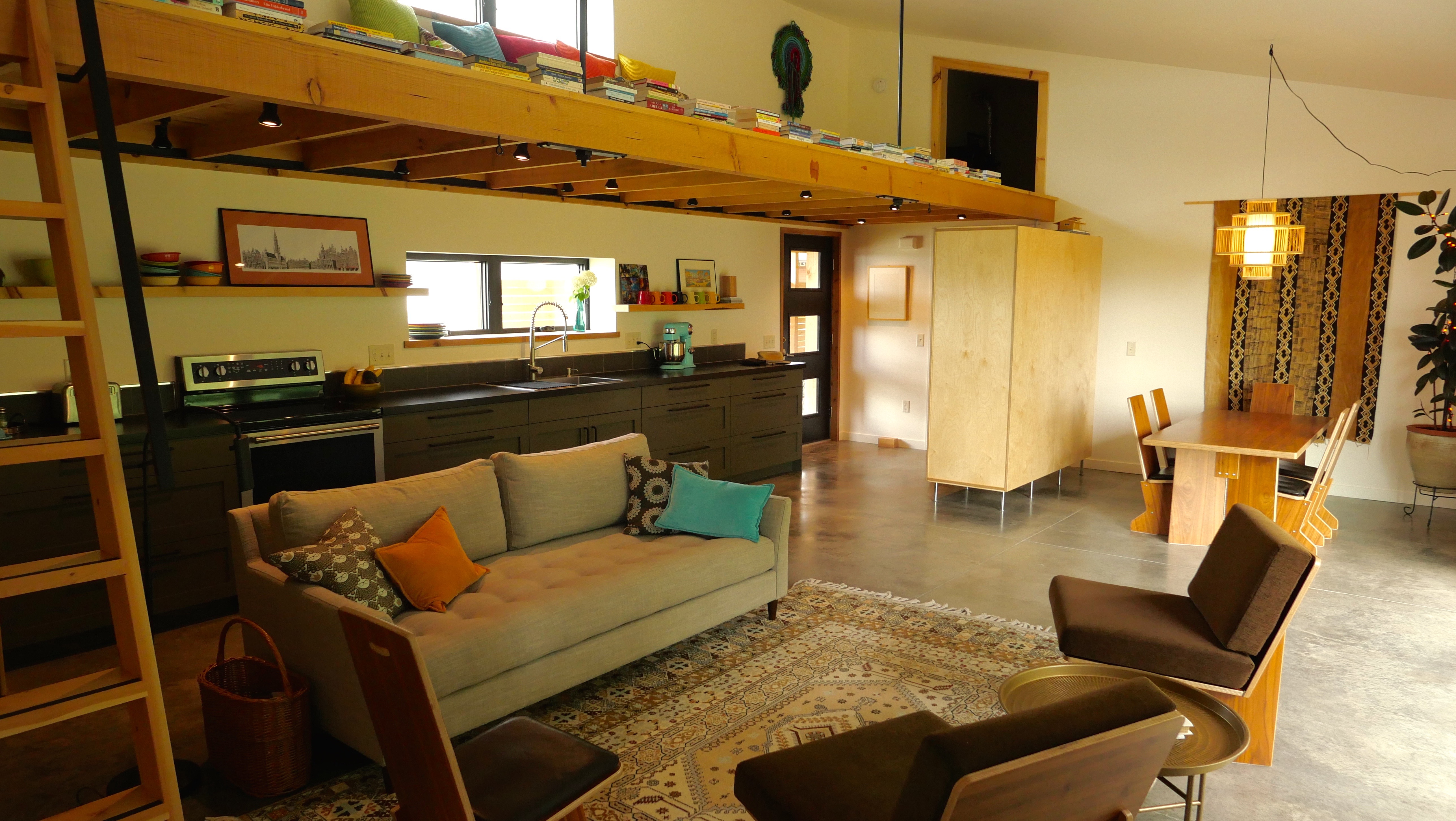
March 7, 2022: “On the boards” is designer-speak for “whatcha working on?” Since I began building my first Poem Home in 2018, I’ve had the opportunity to design 6 new super-insulated homes for my clients. Each one reflects their unique place in the world and their owner’s design sensibility.
Up north, overlooking a pristine lake (a God’s Drop if you think like Thoreau), an iconic-looking summer camp is taking shape. This stunner is not only complex and a serious undertaking, but also being built almost entirely by the owners, a couple who are truly living their dream. This home has 2×6 framing and 4 inches of sheet foam for an R-40 wall.
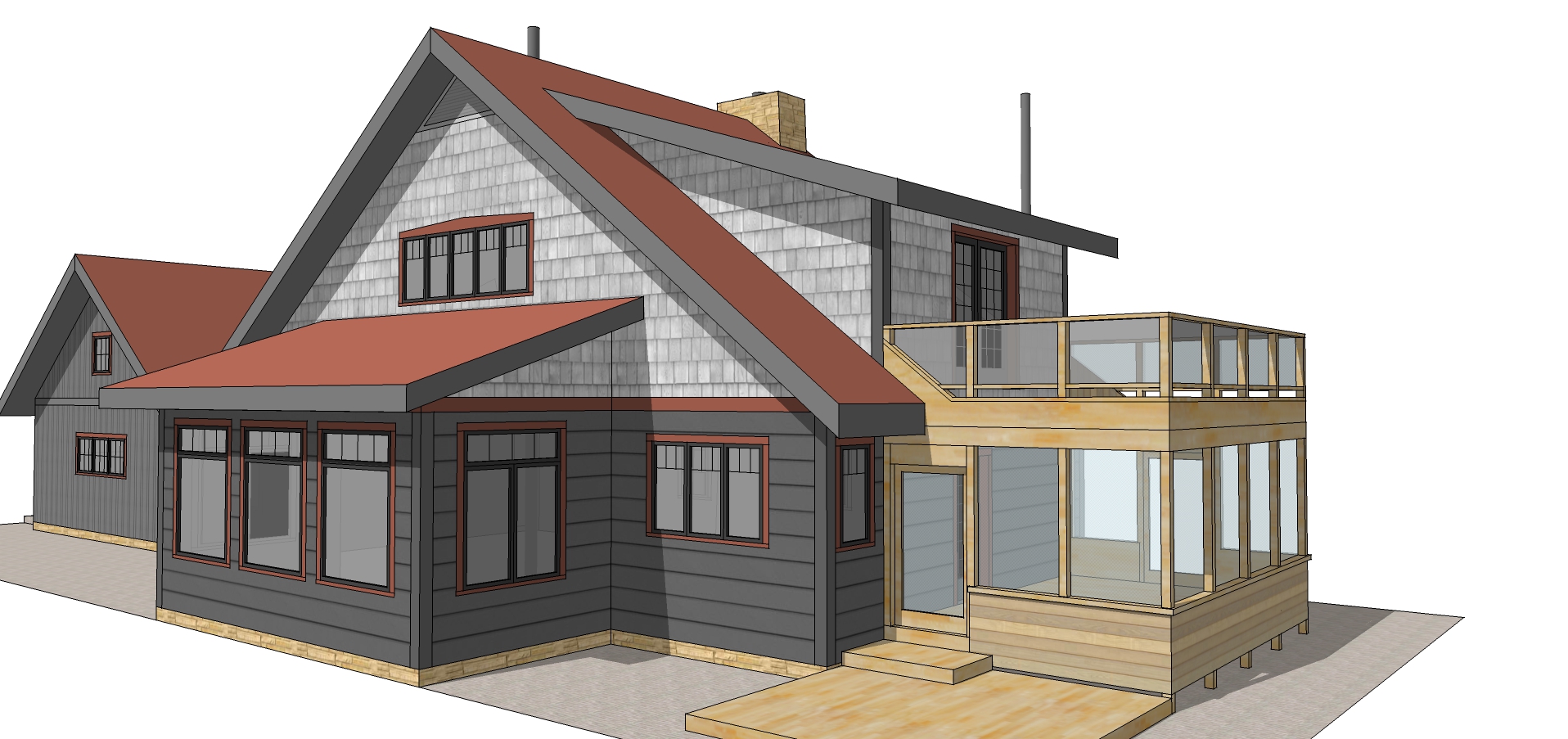
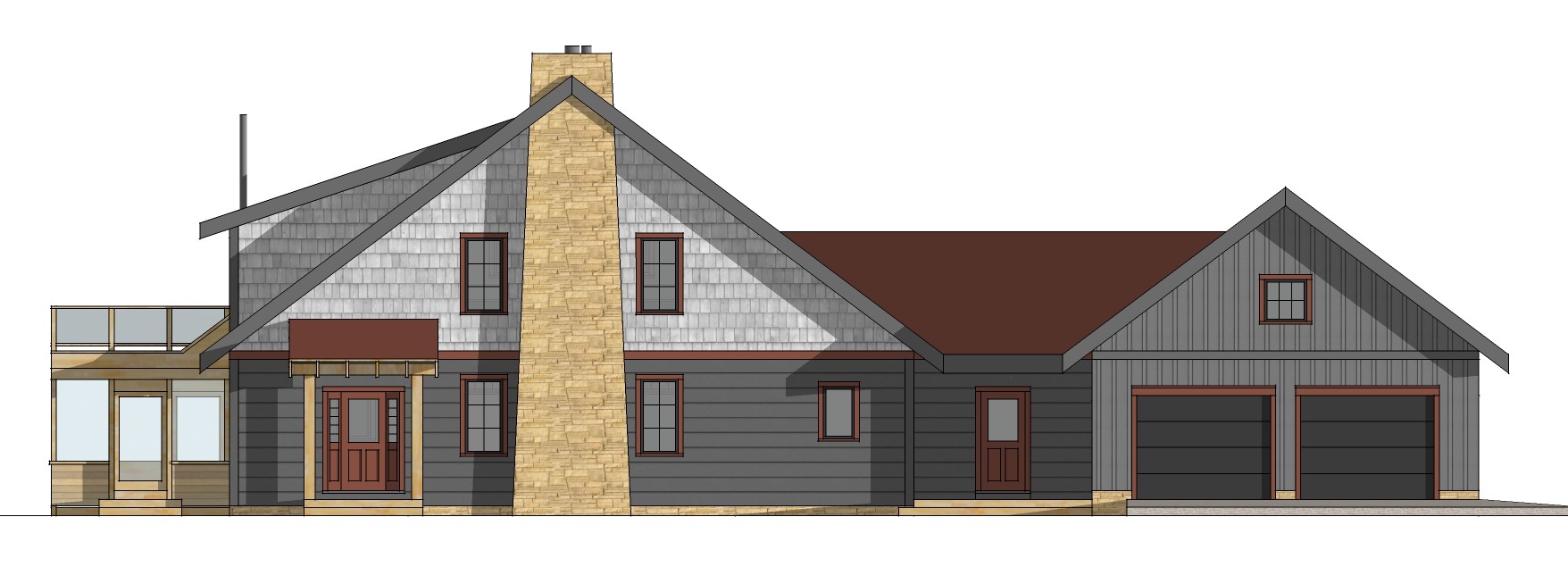
Further south and situated along a quiet street in a mid-size city, will soon be an accessible home for a single retiree. It’s an R-45 double 2×4 wall house on a slab, with an R-60 vaulted ceiling in the great room. The design is modern and bold, with a single concrete pillar holding up the front porch.
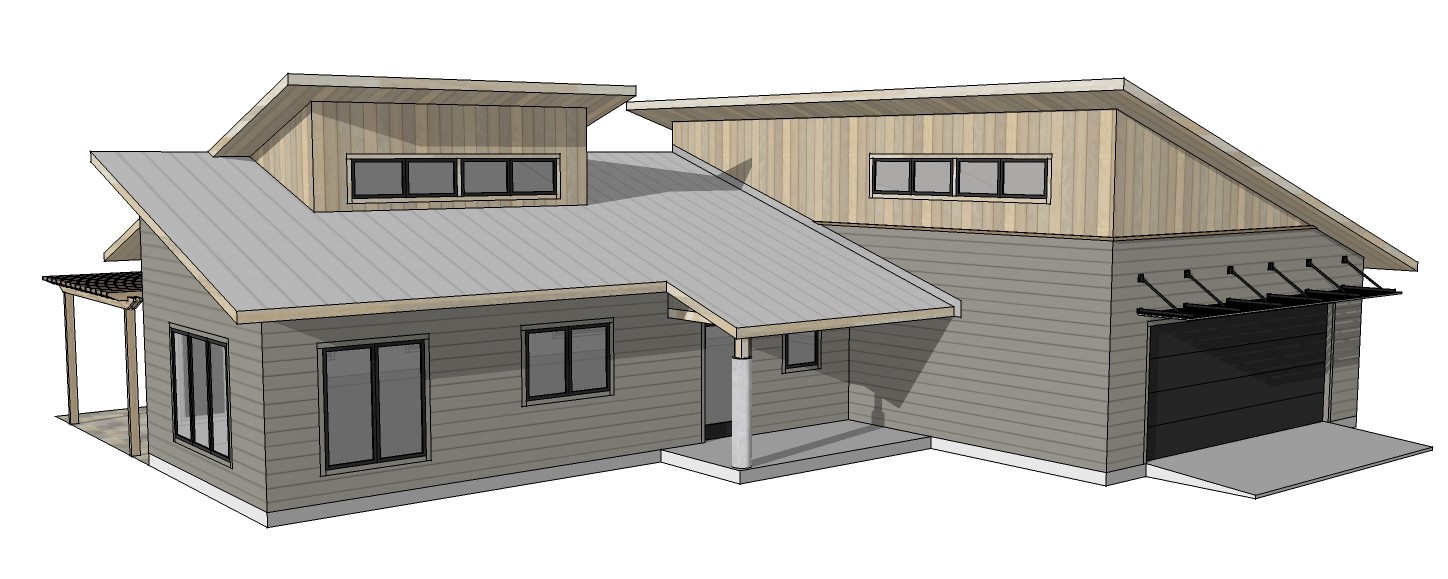
Overlooking the fields and forests of central Wisconsin, a simple and sturdy home will be built by a capable couple with young children. It’s also a double wall house on a slab with a vaulted ceiling. The exterior will be clad in “barn steel” and the south facing windows will be shaded by a wood post & beam “rooflet”. At one end of the house is a 3-season room with bi-pass windows that can be thrown open in good weather.
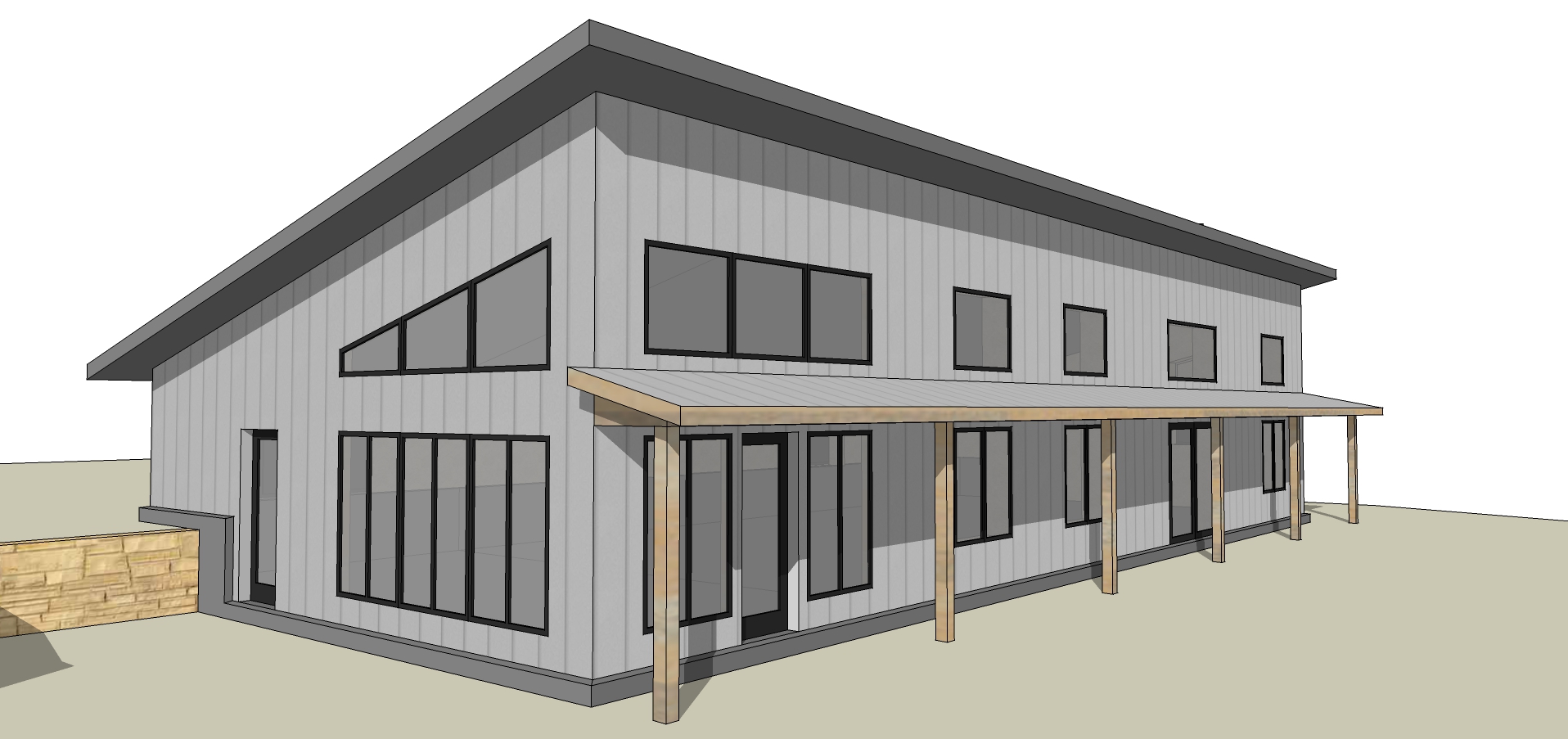
When you have an alley behind your house and you need a garage and a workshop, why not also add solar panels, a hot-tub deck, and guest quarters? This double wall house on an ICF (insulated concrete form) foundation with a vaulted ceiling and triple-pane windows will meet the highest standards of energy-efficiency. It will be a place for fun, family, friends, and projects.
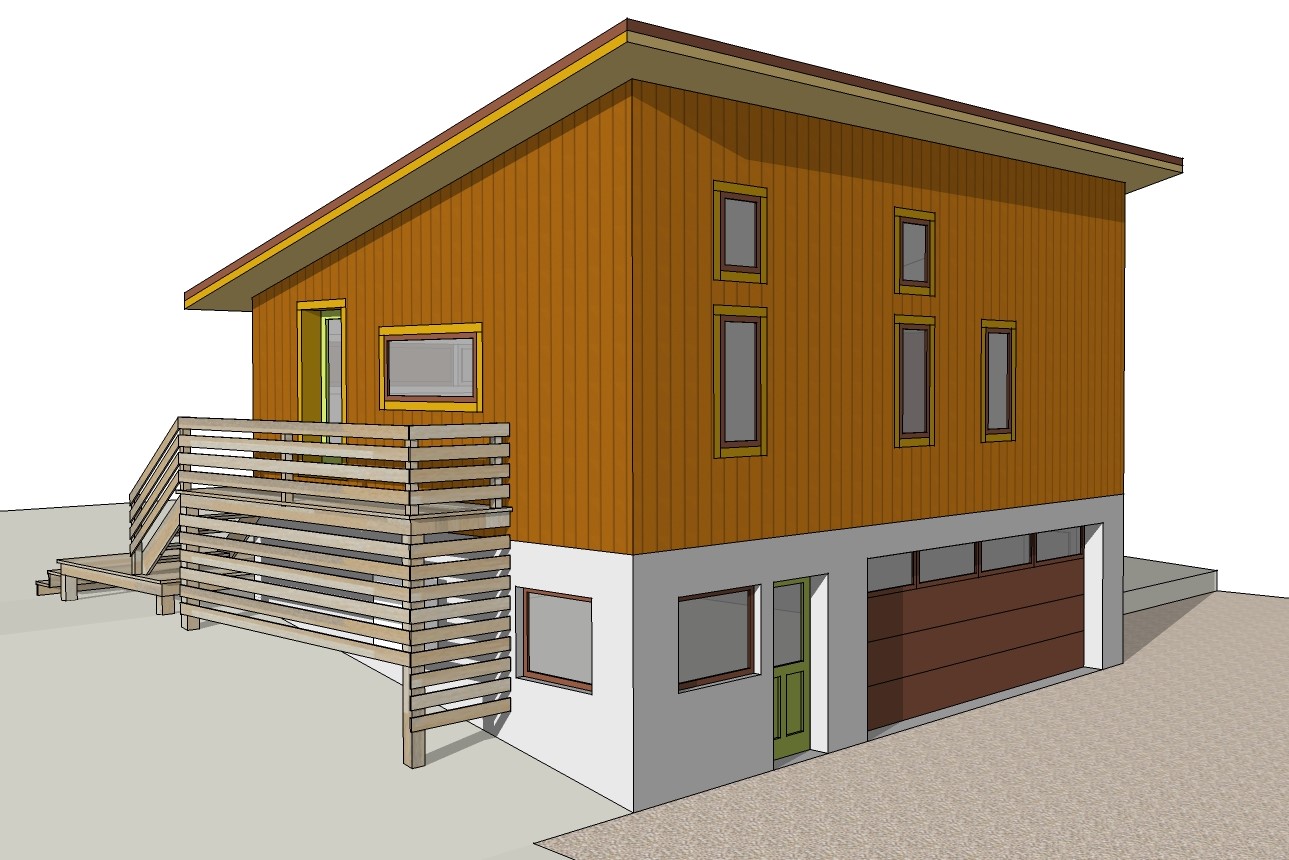

A lovely meadow overlooking a quaint town is the perfect place to be. This home will be enjoyed by the owners as a second home and also rented out to the many tourists who frequent the nearby art galleries. The design is an almost-replica of the Poem Home in Spring Green, except the second bedroom and bath are in the lower level. This home will easily achieve net-zero.

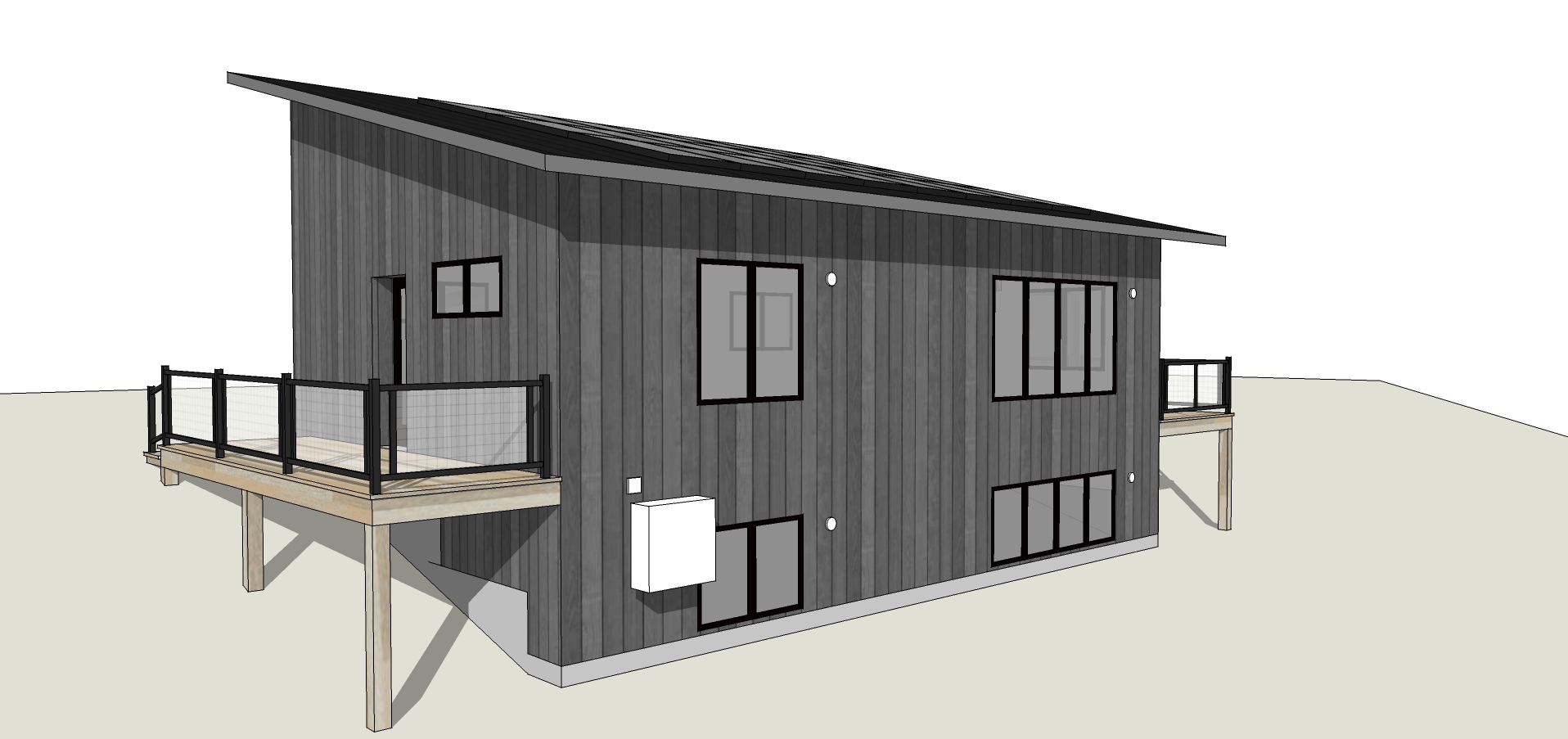
Could it be a trend? This ambitious young couple are going to “GC” (general contract) and do most of the work to construct their own home. Located down a country lane and overlooking the Wisconsin River Valley, it will make an enviable retreat from the world. My clients came to me with a well thought out floor plan, a building section, and a list of specifications that needed only a little refinement on my part. It has 2×6 walls with 4″ of sheet foam on the exterior, an ICF foundation, and high-heeled roof trusses for all-around really great R-value.

Do you know someone (maybe you?) who’s thinking about a new house and understands that we really can do better than conventional construction? I have a wealth of knowledge and experience that I’m happy to share, in whatever way is most helpful. Let’s get in touch!
January 14, 2022: I’m thrilled to be included in Zero Energy Project’s newsletter with my article “My Net Zero Home Got Me Through a Wisconsin Winter-Here’s What I Learned”.
Zero Energy Project has tons of good information about how to improve our built environment, and a “zero energy home professionals near you” search option. Did you know there are only 9 zero energy projects listed within 100 miles of Madison? People, we need to get going!
I’m going to be taking a deep dive into their articles on zero carbon building. Instead of just looking at operational costs like we do with “net zero”, “zero carbon” looks at the embodied energy of the materials used to make the building. Stay tuned: if I can figure out the math, I’ll let you know how I came out on that score.
Friday-Sunday June 21-23: Have you been wondering what you can do to reduce your carbon footprint? Would you like to help build a straw-bale wall? Get a good look at the latest electric cars? Learn how to raise chickens? Can you picture yourself eating pizza from a outdoor wood-fired oven? Listening to live music while lounging in the grass? If so, you can’t go wrong at one of my all-time favorite events: the Energy Fair in Custer, Wisconsin.
I’ll be giving a talk about building Spring Green’s first Net-Zero Energy house on Sunday at 10 am called “Follow the Build-Part 1”. Here’s the link to my presentation: Follow the Build 2019
I hope to see you there (or at the beer tent).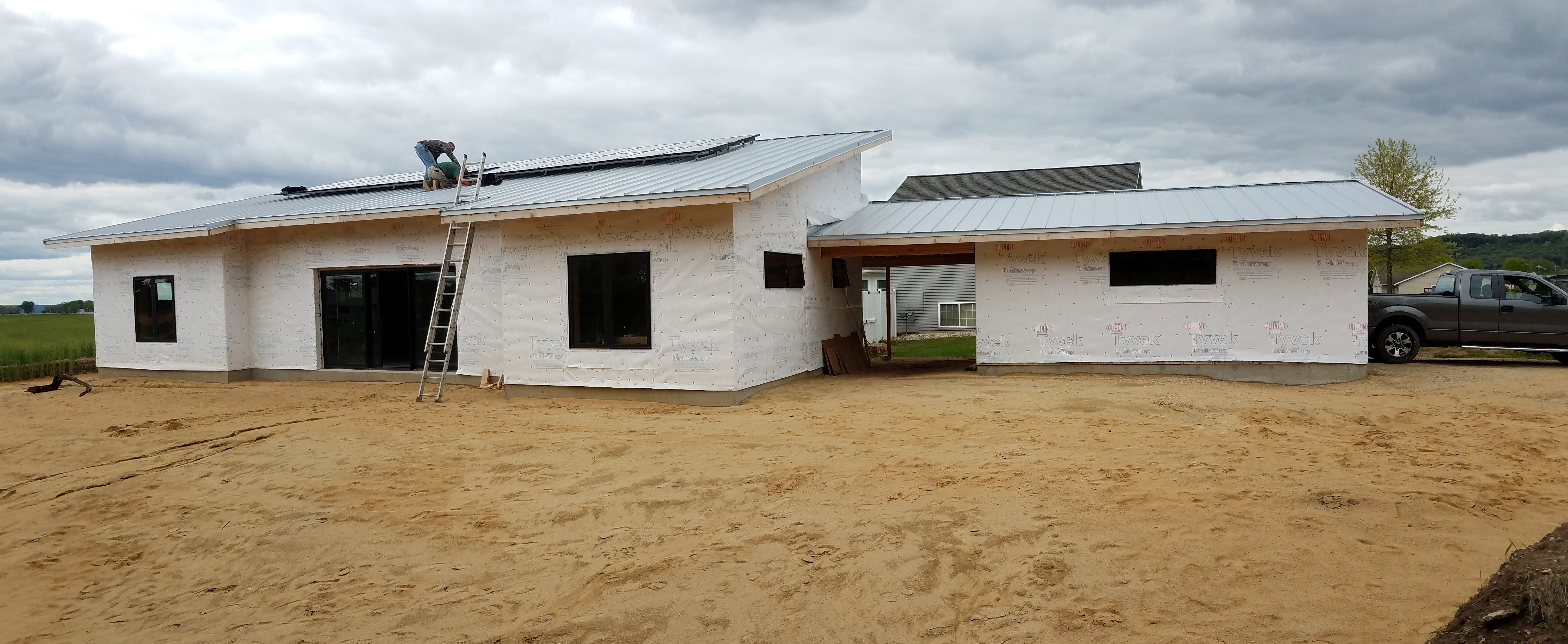
 POEM HOMES